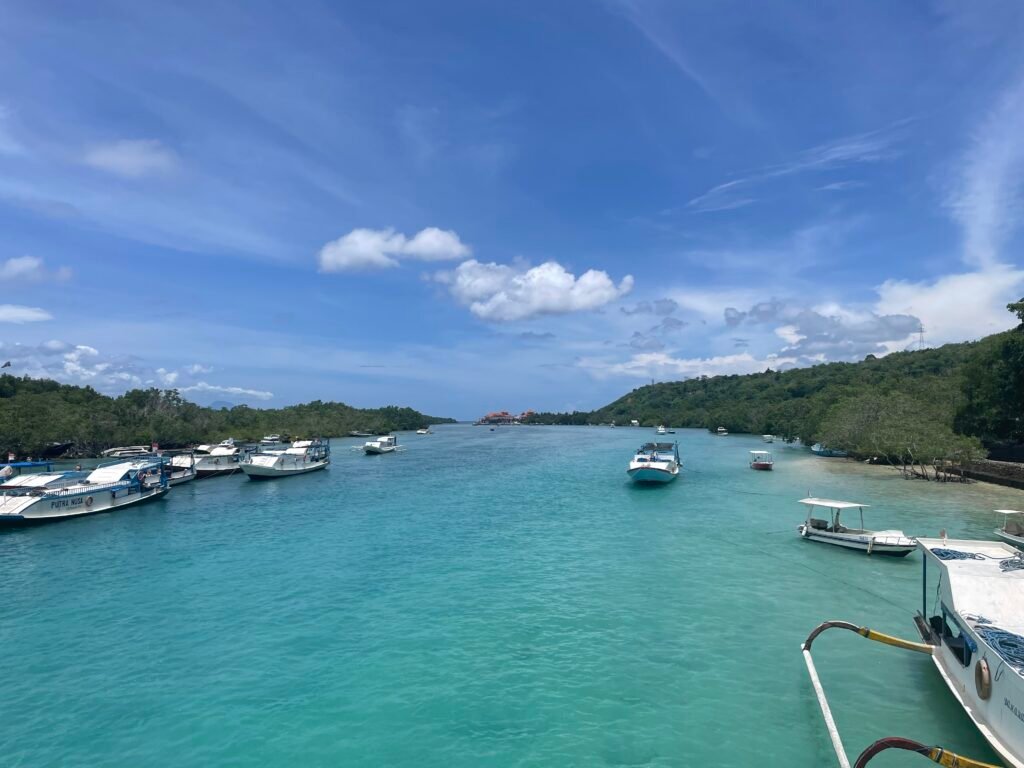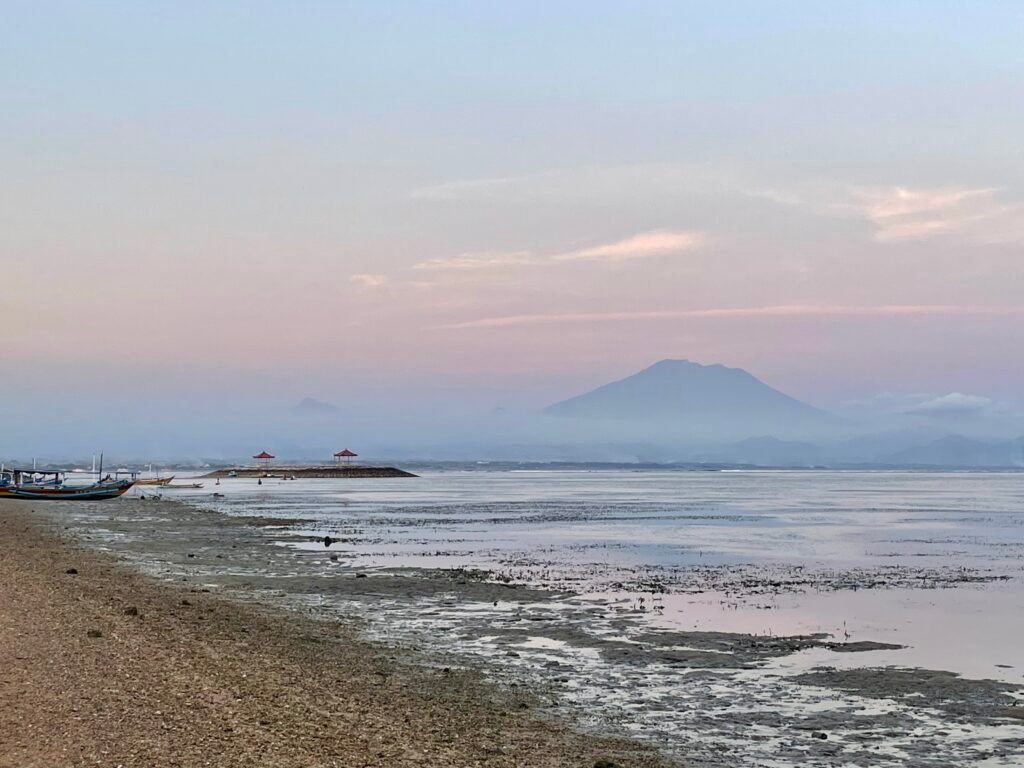
Arriving in Bali: Budget flights, chaos and first impressions
We flew to Bali on a budget flight from Perth, determined to keep our trip as light and affordable as possible. Everything we needed for five weeks of backpacking and island adventures was squeezed into a 7kg hand luggage allowance, a challenge that required stuffing every pocket and wearing far too many layers.
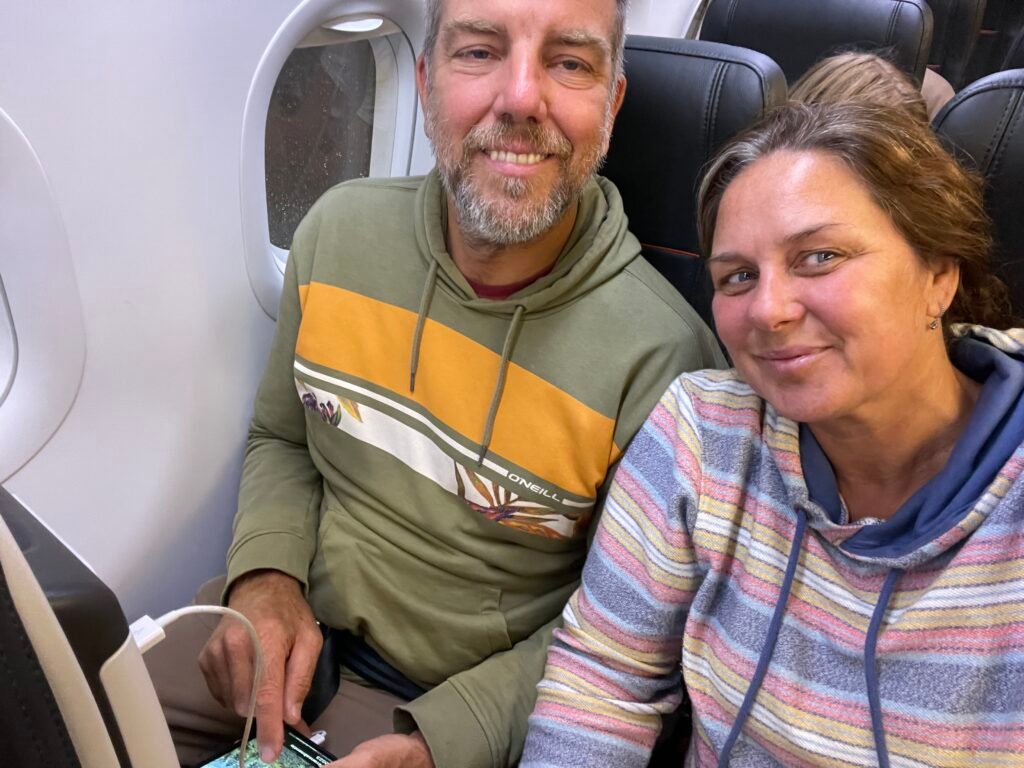
The moment we stepped into the arrivals hall, the humid Bali heat hit us like a wall. After navigating the visa-on-arrival process and handing over the 500,000IDR for a 30 day visa, our next task was figuring out how to get from Bali airport to our accommodation.
We decided to use Grab, Southeast Asia’s answer to Uber, which connects travellers with everything from scooters and mopeds to minivans and even luxury cars. We had already downloaded the app, so booking was easy. We were then sent a description of the car and a photo of the pickup point, finding this and our driver, however, was another story.
Outside Ngurah Rai International Airport (Denpasar), the arrivals area was pure chaos — a blur of suitcases, shouting drivers, and the ever-present offers of “Taxi, taxi!”. After several sweaty minutes of searching for the Grab Lounge and trying to locate our driver, the app informed us that the booking was cancelled. Tired, overheated, and surrounded by determined taxi hawkers, we finally gave in and negotiated a fare with one of them (240000IDR – £12).
It wasn’t the smoothest start to our Bali adventure, but it was a fitting welcome to the organised chaos that makes travelling in Southeast Asia so unforgettable.
Once in the taxi, we set off for our first hotel in Sanur, just under an hour northeast of Bali’s Ngurah Rai Airport. We’d hurried through the airport, fully aware that the hotel check-in closed at midnight, and our ETA was cutting it fine: five minutes to spare, so every second counted.
To our relief, the journey went smoothly. We pulled up at the hotel just before the clock struck twelve and were instantly impressed. The lobby was bright and welcoming, and the entrance surprisingly elegant, far exceeding our modest expectations. With a nightly budget of under £30 for both of us, we weren’t expecting much more than a bed and a fan.
Check-in was quick and effortless, and our room turned out to be spacious, spotless, and well-equipped, even if it did require a bit of a climb to the third floor. On the way, we passed a serene courtyard pool, softly lit under the night sky. The sight of sun loungers lined up by the water had us instantly dreaming of a lazy morning ahead, the perfect reward after a long day of travel.
We stayed at the Ari Putri Hotel in Sanur.
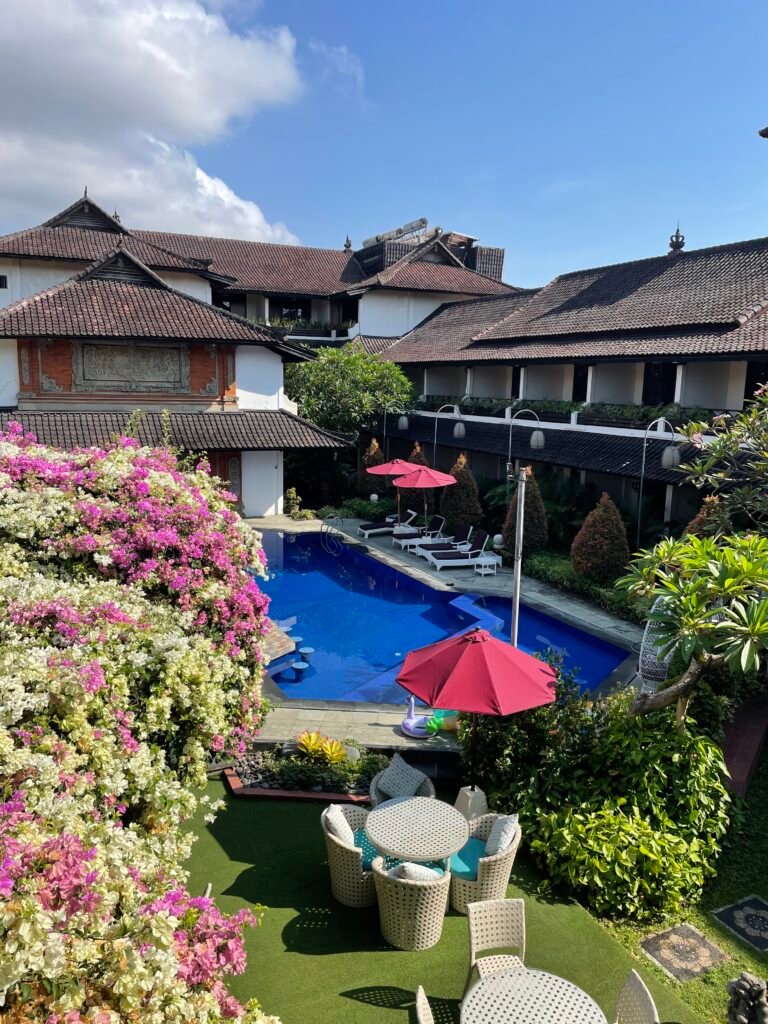
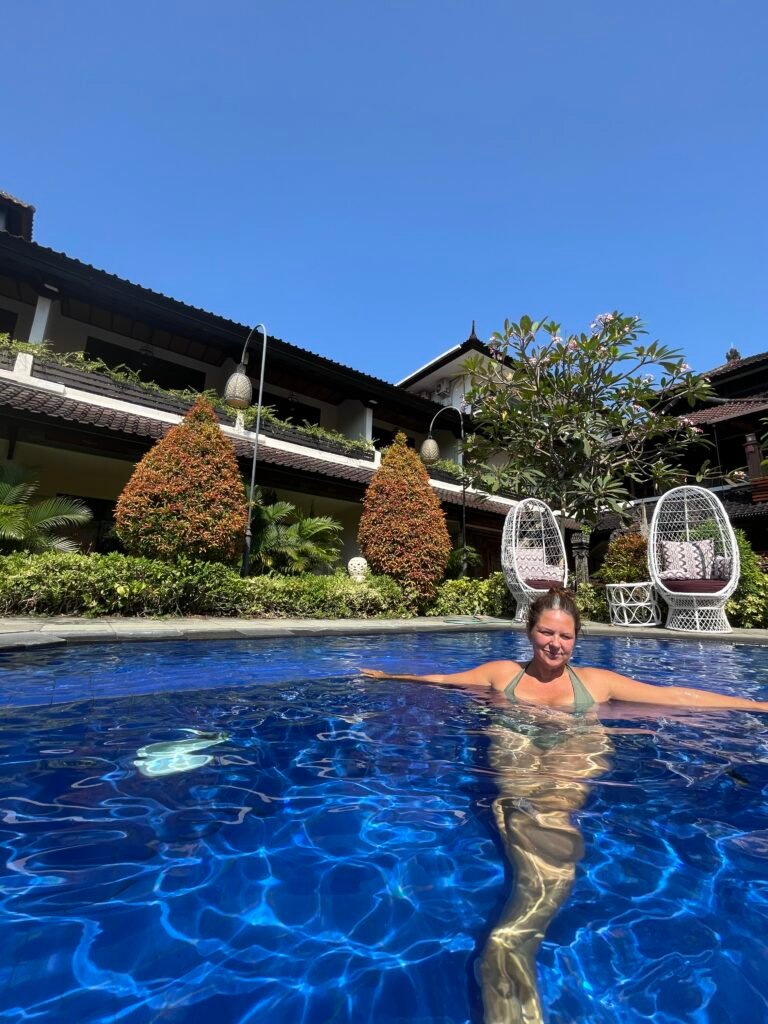
As with most of our travels, we’d used Booking.com to find and secure our accommodation. It’s not always the cheapest option, nor does it guarantee the widest range, but we’ve learned how to work the system — and their customer service has saved us more than once.
Sanur : Slow mornings and settling in.
Our hotel turned out to be a real gem, at the very southern end of Sanur, just one street back from the seafront, yet blissfully peaceful. Everything we needed was within strolling distance: bars, cafés, restaurants, and the odd convenience store which came in handy for suncream and an adapter (they use the US type here). The short walk to the beach took us past plenty of options to enjoy local food and also the occasional dodgy looking alleyway. In some places we’ve visited this might make us feel a little uneasy, but here in Sanur, we felt totally at ease. In fact, throughout our time in Bali, we’ve never once felt unsafe or unwelcome—which is saying something given some of the places we’ve wandered through.
Out and about in Sanur
The beach at Sanur was not bad, it’s sandy, fairly clean, and clearly gets a bit of tourist TLC. It’s no tropical paradise, but it’s perfectly pleasant. Things changed a bit when we wandered down to the southern end, where the dive boats unload and most of the crowd are locals. There, the amount of plastic pollution was heartbreaking, and what’s worse, no one seemed to bat an eyelid. We’ve seen this in so many corners of the world—Morocco, Mexico, you name it, and it still amazes us how people can live surrounded by rubbish and somehow not even notice.
Up towards the northern end, Sanur scrubs up nicely again. Beach clubs, bigger hotels, and chic restaurants line the foreshore, all very photogenic and pleasantly breezy. We even found a few healthy cafés serving excellent food such as nourish bowls and smoothies at very good prices.
Nightlife is varied and plentiful, with lots of options for live music. We even managed to find an Asian doppelgänger for a family member singing at a local bar. I had a great birthday celebration, watching the band and drinking too much gin; Tara even managed to get the band to sing happy birthday to me!
Our four nights were very much rinse and repeat: breakfast eggs, laze and swim, walk to the beach, chill some more, before finding somewhere to have dinner. No complaints! it was just what we needed. Given the variety of dining options, we were spoiled for choice. Tara managed to fit an hour and a half of yoga into our busy schedule, which she reviewed as very slow and relaxing. I think she may have fallen asleep during part of it! Surprisingly, yoga isn’t as cheap as we’d expected, they were clearly catering to tourists and prices were similar to the UK (140,000IDR about £7).
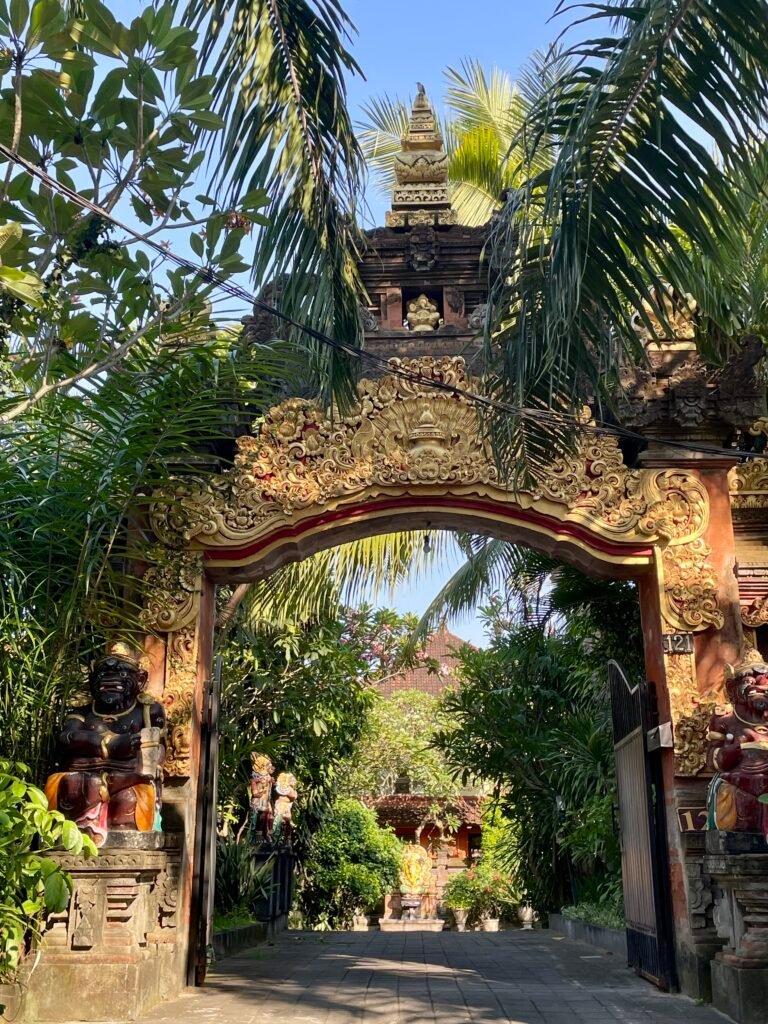
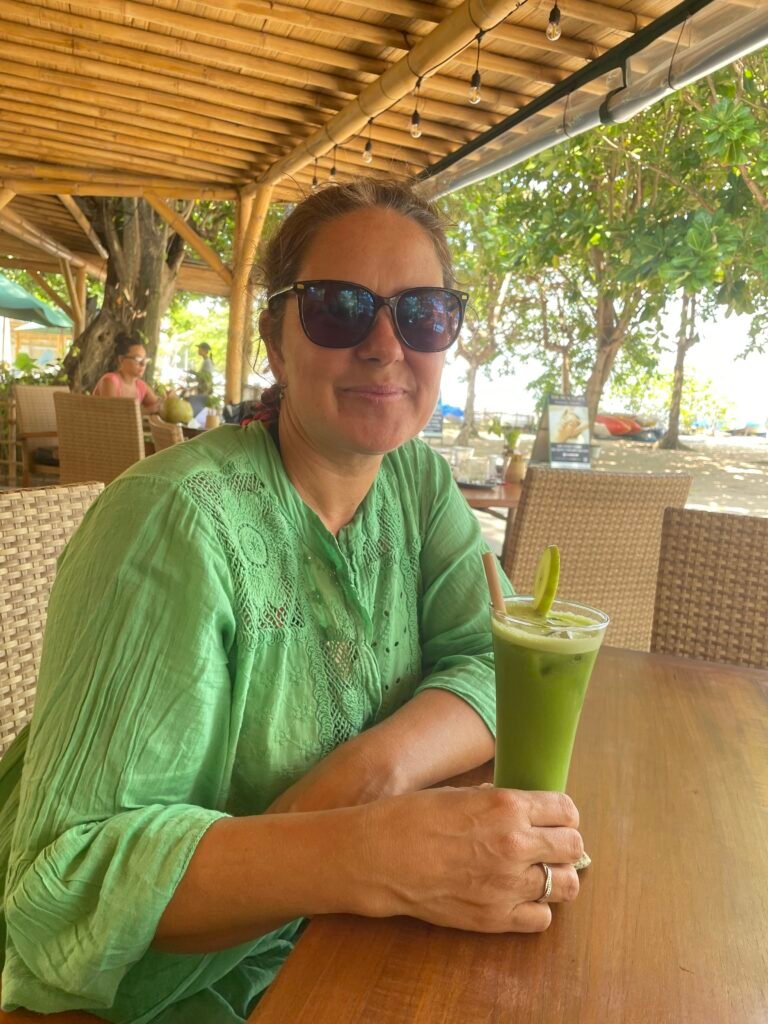
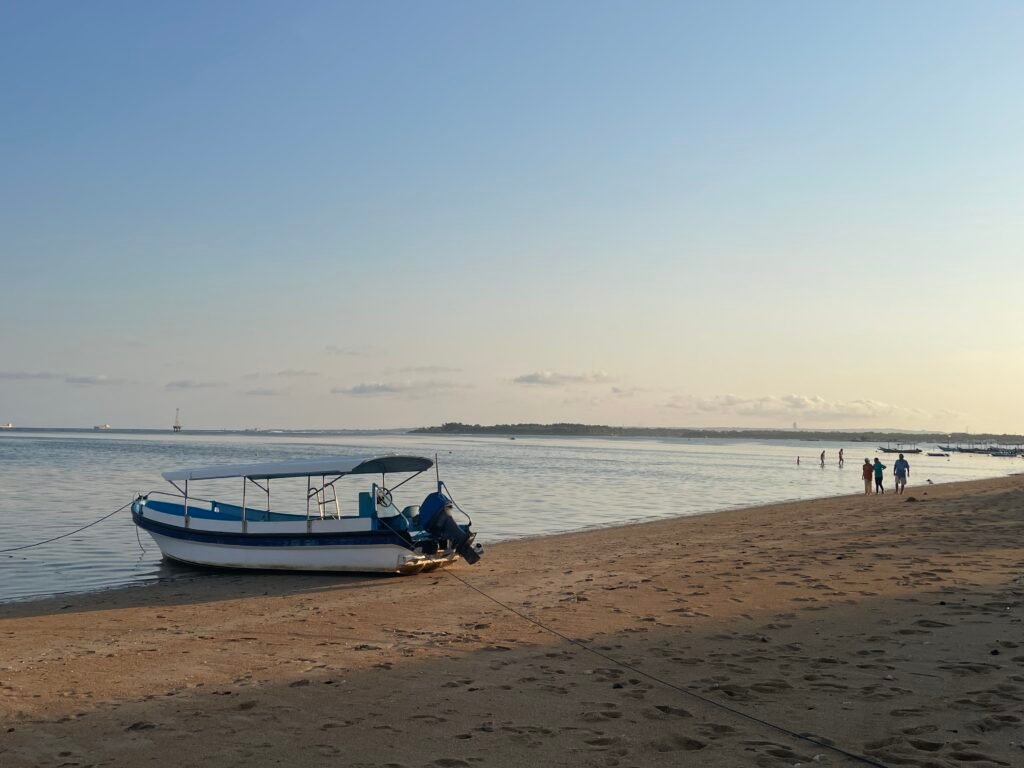
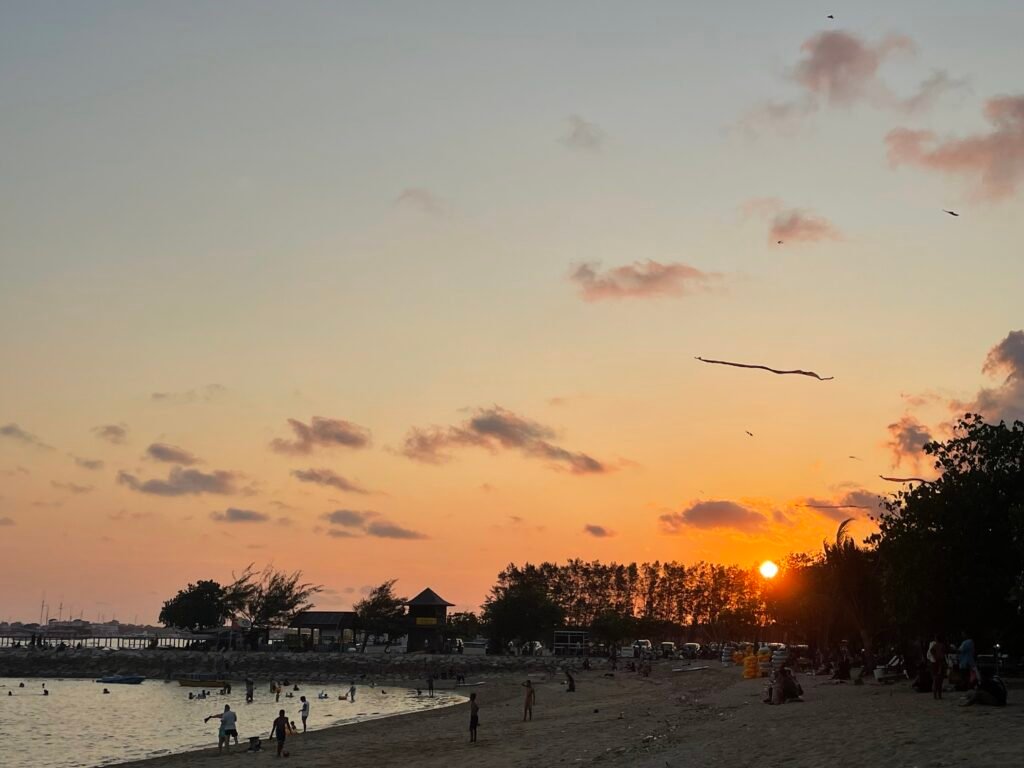
Sanur had given us exactly what we needed, a laid-back intro to Bali and a few days to recharge and reset. We were starting to feel a little more chilled and ready to move on, so turning to our Grab app, we booked a taxi to our next destination — the spiritual centre of Bali, Ubud.
The drive to Ubud was only about 15 miles, but what might take half an hour anywhere else took us nearly two. We crawled along packed streets, surrounded by scooters, trucks, animals, and pedestrians all jostling for space. Progress was painfully slow, but at least our Grab taxi was clean, cool, and comfortable.
Taxis in Bali are incredibly cheap, almost embarrassingly so and we often felt guilty paying so little for such long rides. We’ve made a point of tipping drivers generously whenever we can.
The route to Ubud was a blur of villages, one after another, with barely a break between the roadside warungs (food stalls), general stores, and scooter garages. Every now and then, we’d catch a glimpse of forest and jungle beyond the chaos, teasing us with what lay further inland.
First Impressions: Ubud
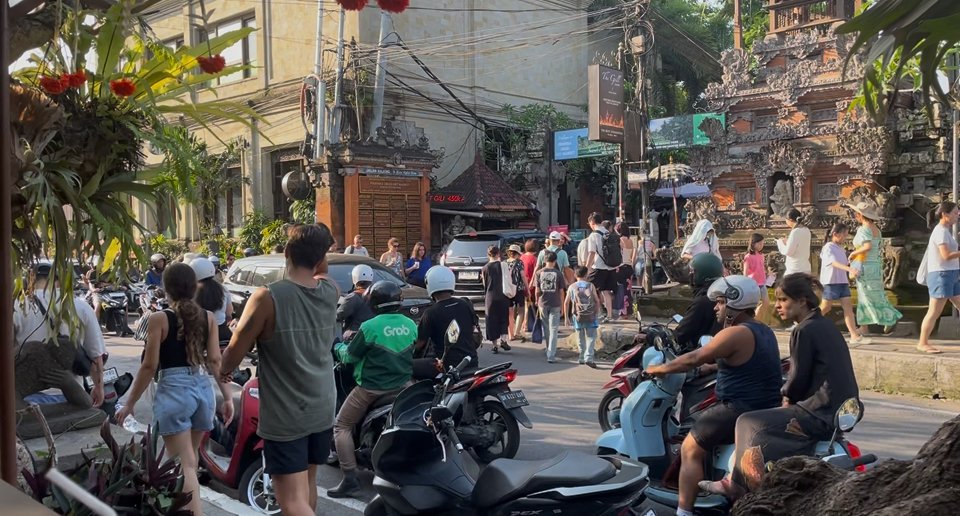
Arriving in Ubud was a shock to the senses. We’d expected a calm, spiritual hub: yoga mats, incense, and mindfulness retreats. Instead, our first impression was one of organised chaos: traffic, crowds, and colour, all squeezed between temples and beautiful Balinese architecture.
Thankfully, our hotel was tucked away on a quieter street about ten minutes’ walk from the main drag. Once again, we’d struck gold, a huge second-floor room with two balconies, one overlooking the pool and the jungle beyond. The infinity pool was a highlight, perfectly positioned over the treetops, with breakfast served right by the water. There were plenty of loungers too, not that we saw too many other guests.
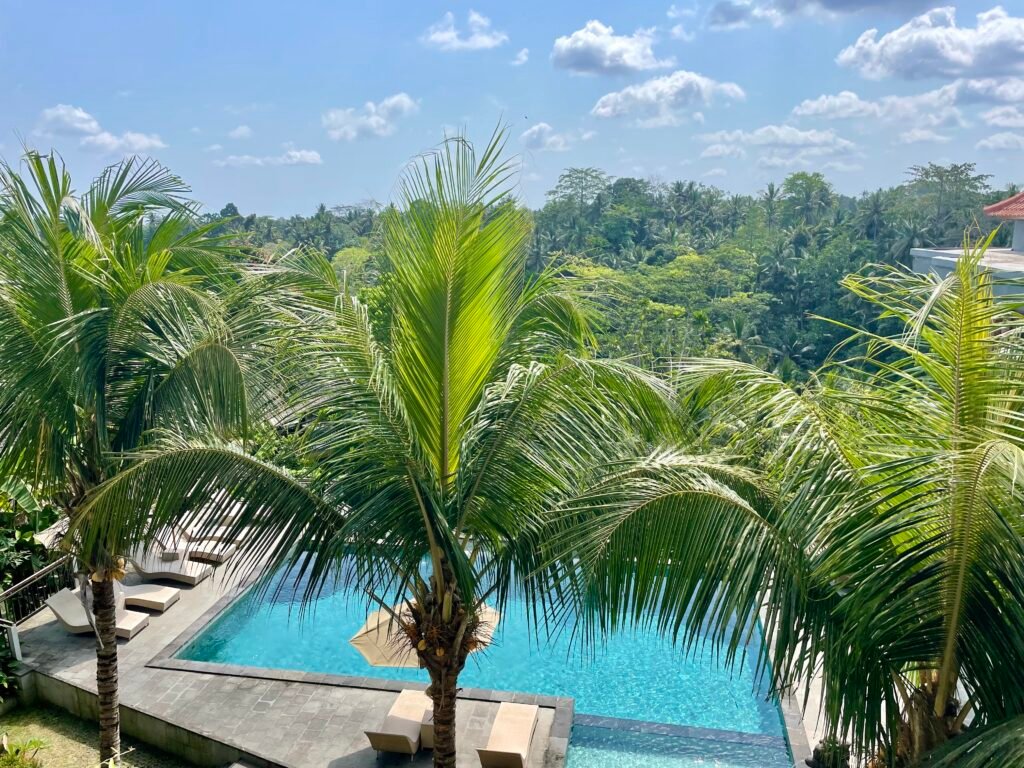
We stayed at the Brata Cottage in Ubud.
Exploring the town
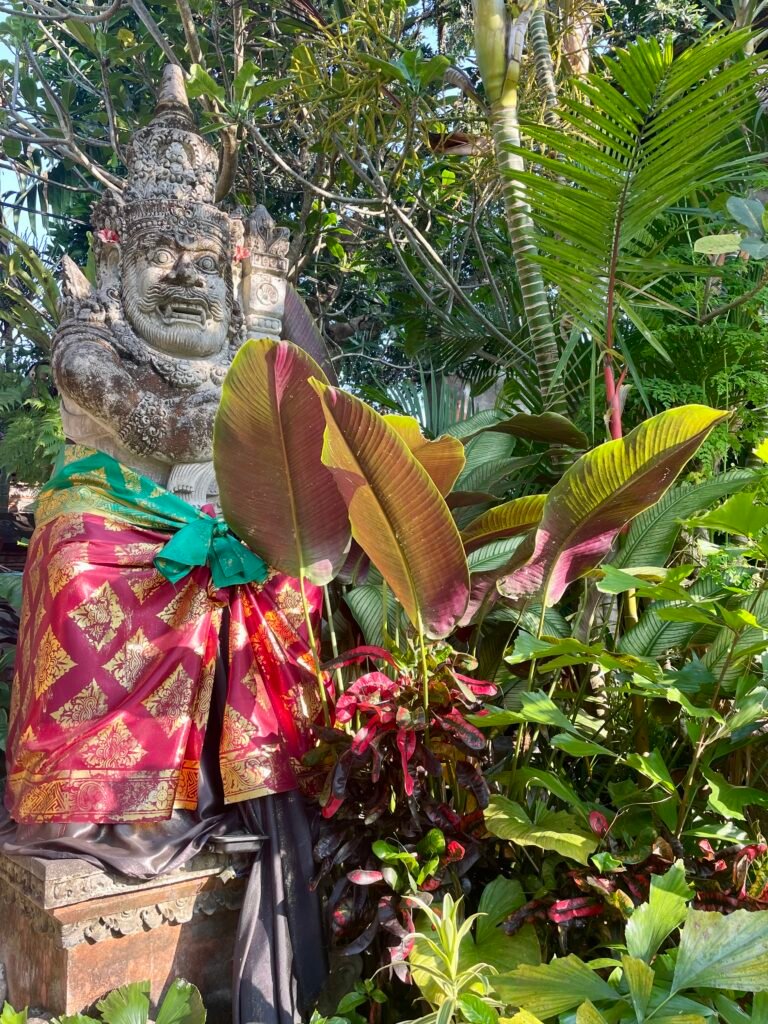
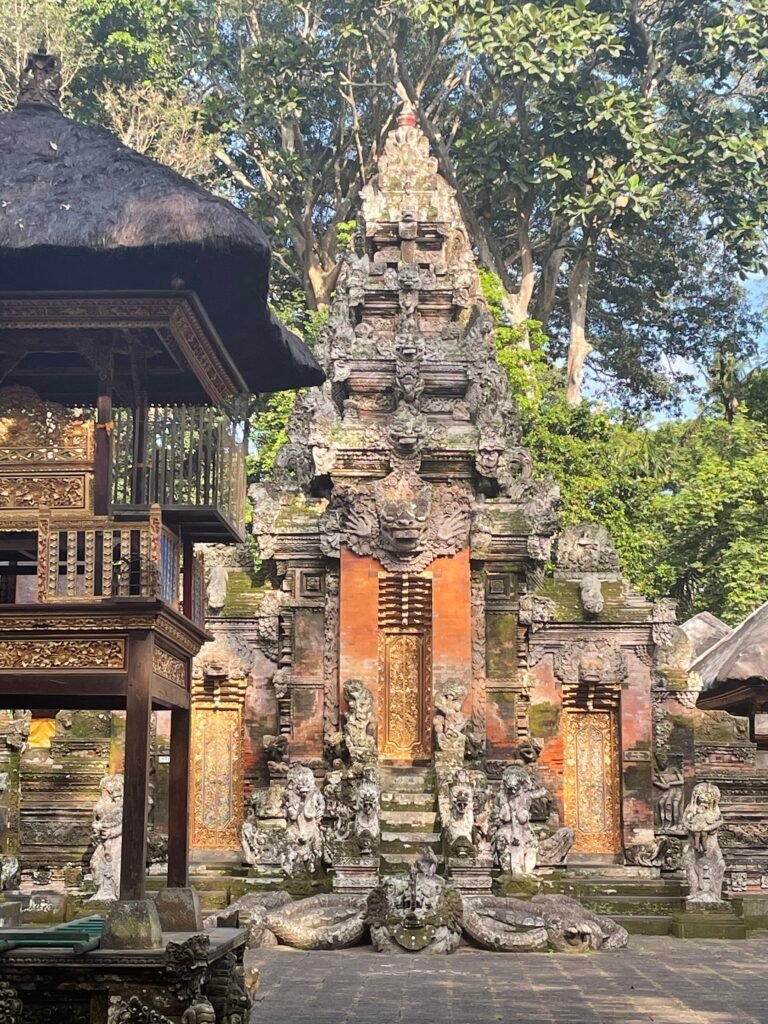
After settling in and cooling off in the pool, we wandered up the gentle hill into central Ubud. The “centre” is hard to define; it stretches out from the main road into a number of side streets filled with everything from massage spas and pizza joints to boutique shops and travel agencies. With plenty of ‘warungs’ or cafes to sit and watch the chaos, we enjoyed a lemon tea and soaked it all in. The Royal Palace and Water Temple seemed to anchor the main tourist hub, drawing most of the crowds. We explored a few temples and cafés and eventually tackled the famous Campuhan Ridge Walk.
The walk begins just outside town, dipping down into a valley before climbing up onto the ridge. In theory, it’s an easy stroll, but in the heat and humidity, it felt more like a workout. By the time we reached the top, we were dripping in sweat and questioning our choices. Once the path levelled out, though, the reward was instant: lush rice fields, rainforest views, and a peaceful village where we stopped for a drink overlooking the greenery. The return walk was mercifully easier.
The Cultural Dance (That wasn’t quite our thing)
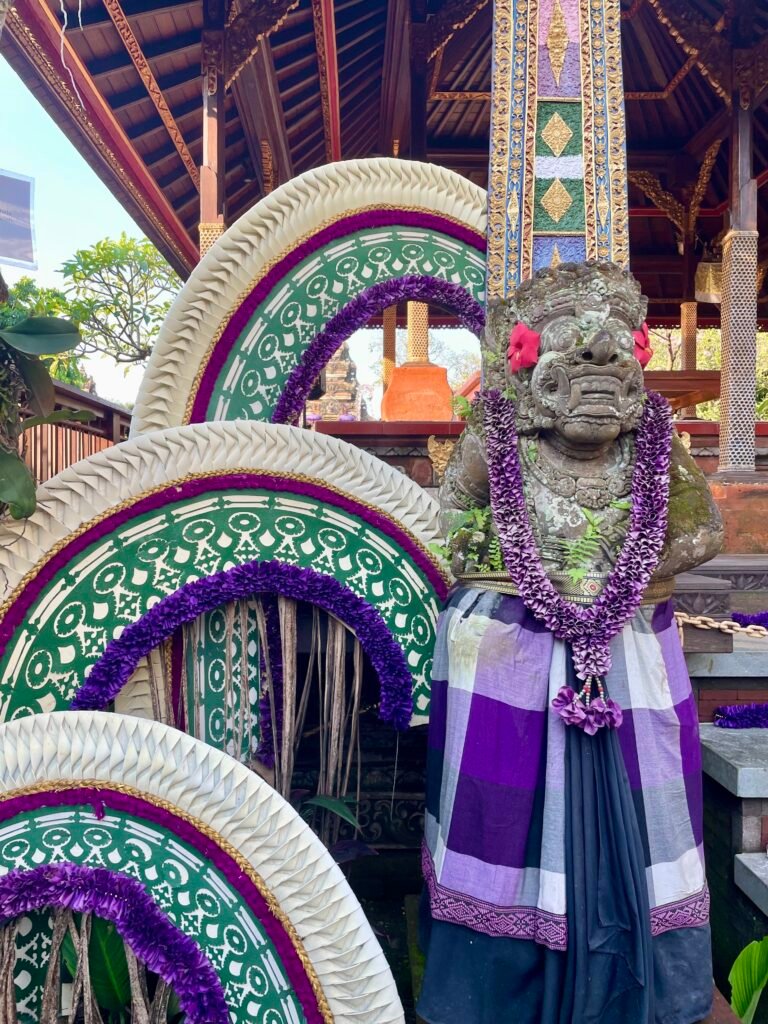
Back in town, we bought tickets for a traditional cultural dance performance in one of the temples. We’d read glowing reviews of similar shows at the main palace—sadly, this wasn’t one of them.
We arrived early but most of the patio chairs had already been claimed. Tara, being the more compact of us, suggested we take one of the raised metal “torture seats” around the edge. After half an hour of sitting on the roasting trays in the oven-type heat, the performance began.
I’d read the English summary beforehand, which was lucky, otherwise I might have assumed I was missing the point, turns out, I wasn’t. The story made no sense whatsoever. The opening dancers were stunning: beautiful, hypnotic, and a little unsettling, but things quickly slid into amateur dramatics. The “monkey” character, complete with a fake tail and questionable comedy moments, sealed it. Ninety minutes later, we escaped, vowing never to hear another note of plinkety-plonk gamelan music again (at least for a while).
The Monkey Forest
We’d originally planned to skip the famous Monkey Forest, assuming it was a tourist trap too far. But since it was just a few minutes’ walk from our hotel, curiosity got the better of us.
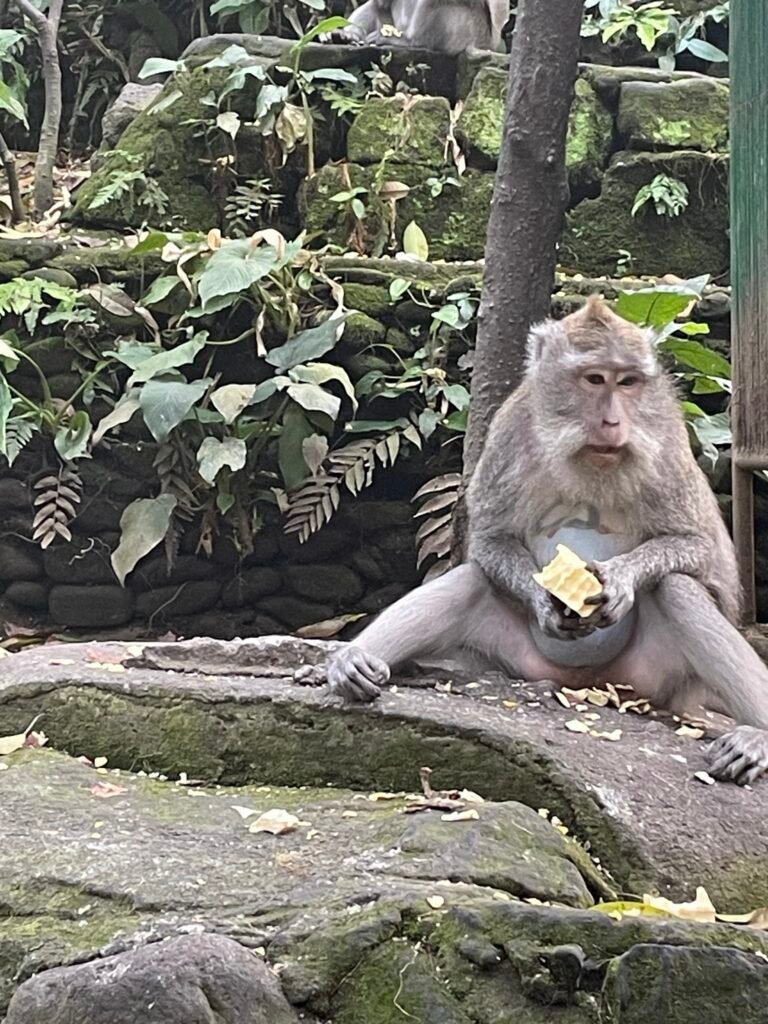
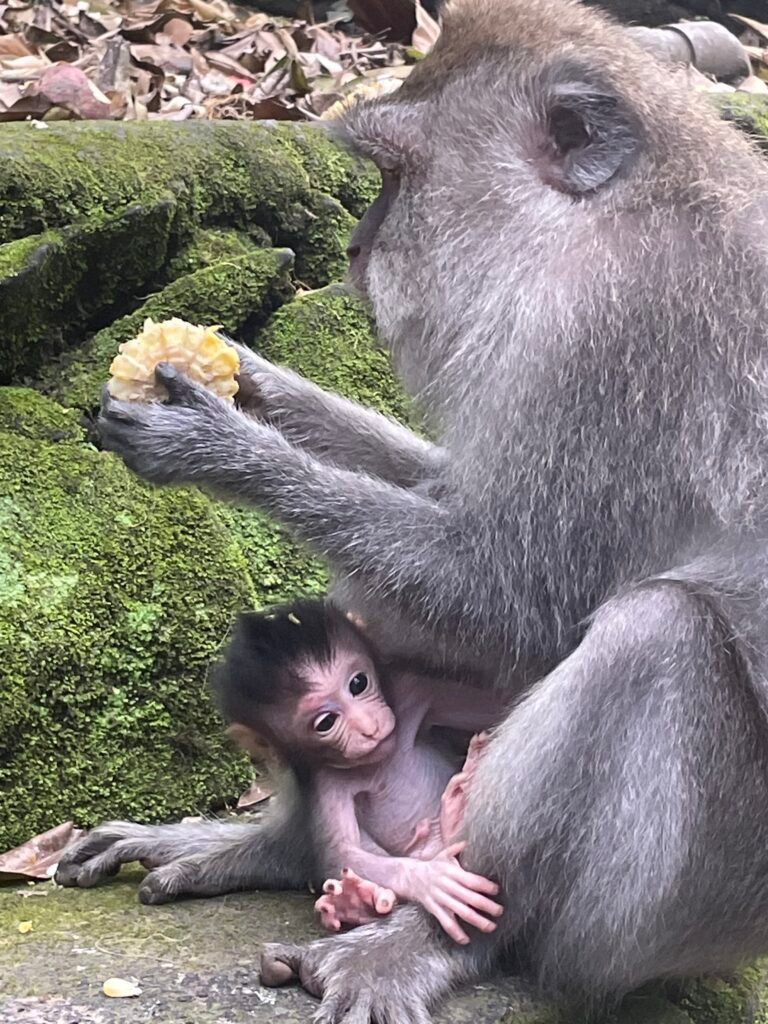
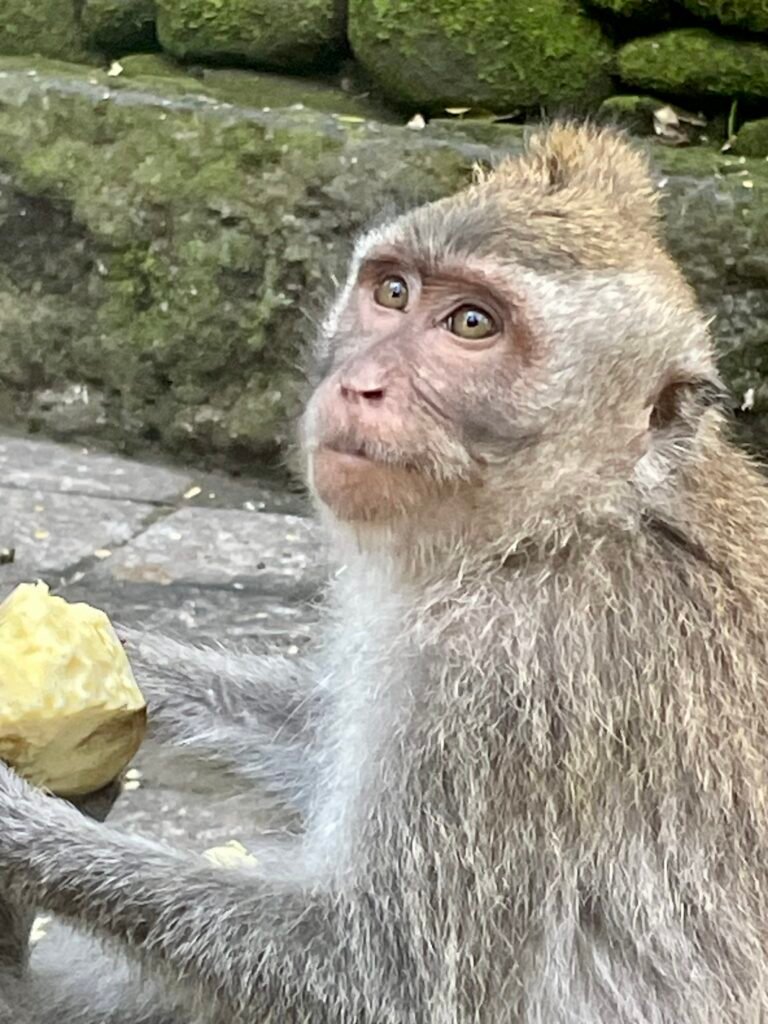
Even before the entrance, we passed small troops of monkeys along the roadside. Eventually, we decided to go in, and we’re glad we did. It was far better than expected. The forest is lush and sprawling, and the monkeys roam freely.
We did feel uneasy about the constant feeding, but they were in no way captive, and their diet looked fairly natural. Watching their social interactions was fascinating, especially how the babies were doted on by multiple adults.
All in all, it was a fun experience, and we’d recommend allowing a couple of hours to wander through.
Final thoughts
Ubud was fascinating and absolutely worth a visit, but after a couple of days, we were ready to move on. Our quiet street and lovely hotel offered a welcome retreat from the madness, but the constant noise and traffic of the main town wasn’t for us.
Time to trade temples and traffic for sea breezes and sand.
Tara had seen online that Amed, on the northeast part of Bali, had a reputation for awesome snorkelling along with a more laid-back pace. After the intensity of Ubud, we felt we could definitely use some quieter days and looked forward to seeing what we could see under the sea.
We’d already checked that a Grab taxi from Ubud to Amed would take around three hours and cost roughly IDR 600,000 — about £30. The day before, we’d debated hiring a driver for a sightseeing tour en route, but the idea of following crowds around “must-see” Instagram spots didn’t appeal. We were also offered a full-day trip ending in Amed, but the thought of spending hours in a car with brief photo stops — for £40 — didn’t really cut it.
After checking out, we booked our Grab, which as usual arrived within minutes. A small, clean car with air-con and a friendly driver — just how we like it. The drive north was about 3 1/2hrs and passed through lush jungle and forest before dropping us into the coastal area of Amed.
Five days in Amed: Sun, snorkles and scooter adventure
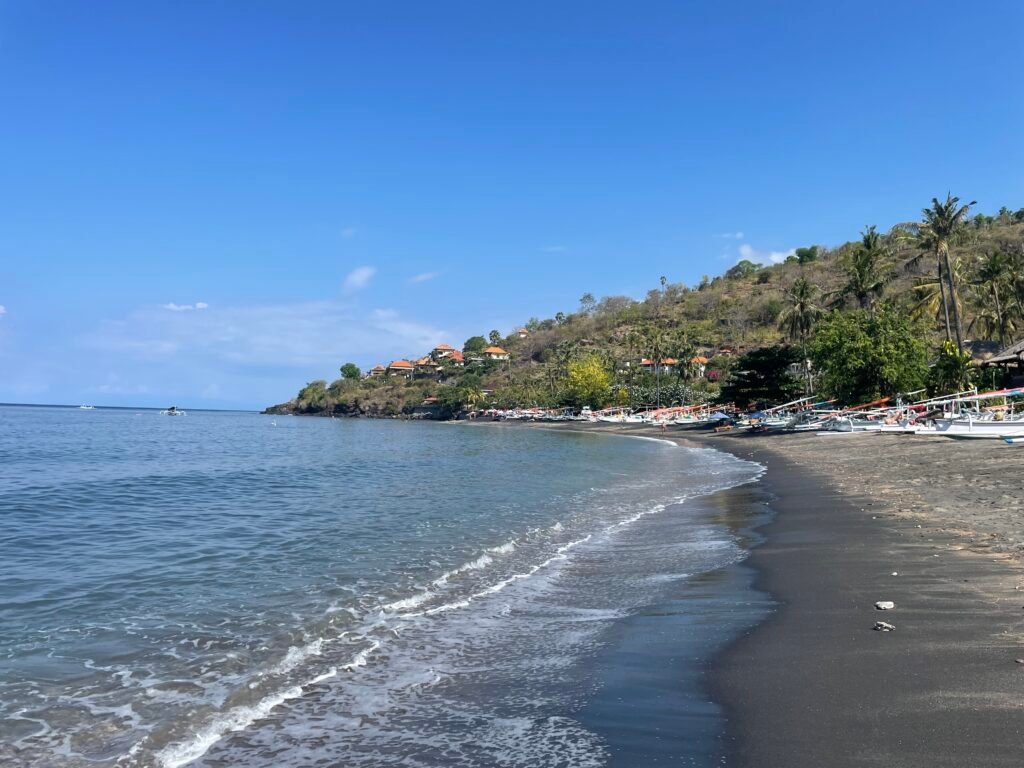
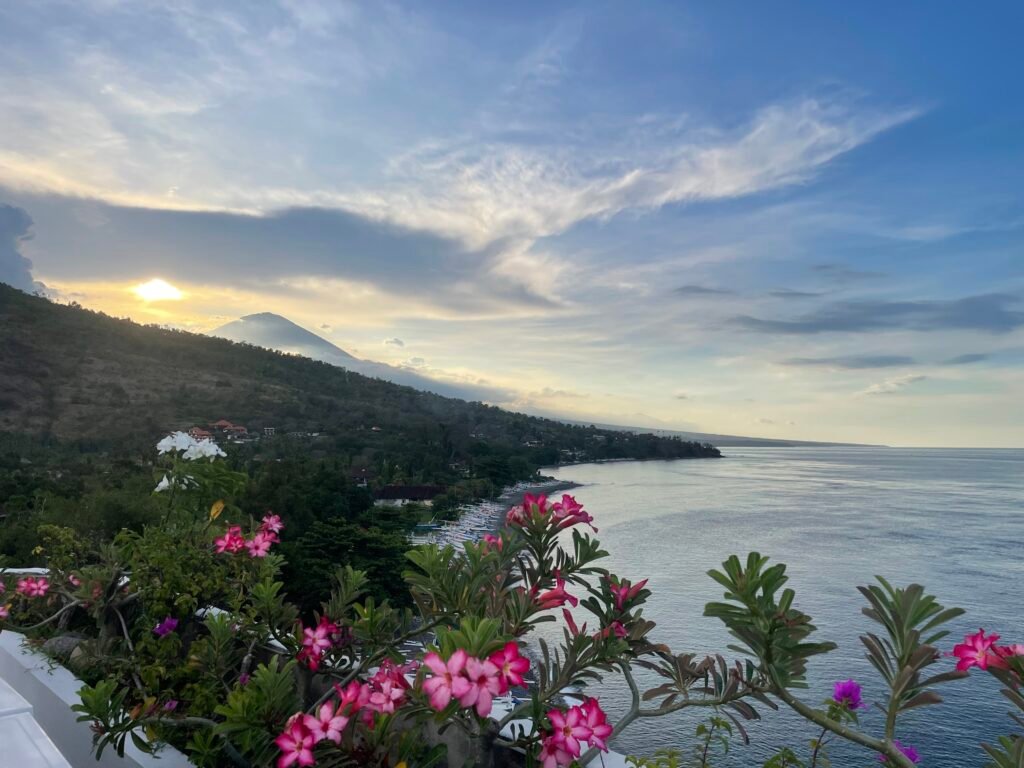
The Amed coastline is made up of a string of small villages — some touristy, some catering mainly to divers, and others still traditional fishing communities, complete with colourful jukungs, the slender Balinese boats with twin outriggers. The beaches are a combination of pebbles and black volcanic sand from the nearby Mount Agung.
To our dismay, the main road through Amed was under construction. Being the only road in, it meant driving straight through roadworks, dodging piles of fresh tarmac and kamikaze scooters. Thankfully, our driver was unfazed and delivered us right to the foot of the steep driveway leading to our hotel.
A Room With a View
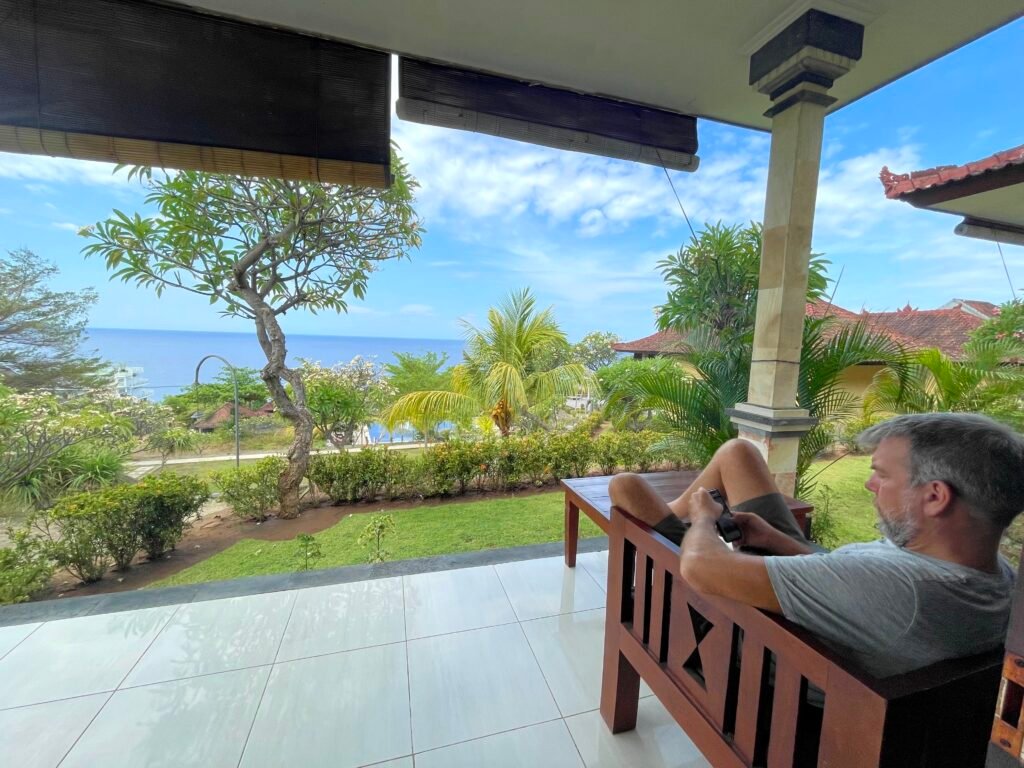
Our host, Wayan, greeted us warmly and helped with the bags. Once again, we’d struck gold : Our villa overlooked the ocean, elevated above the road and seafront properties. Glass doors opened from the bedroom onto a small terrace with uninterrupted sea views. Our room came with a friendly cat we named Bintang – who we quickly adopted.
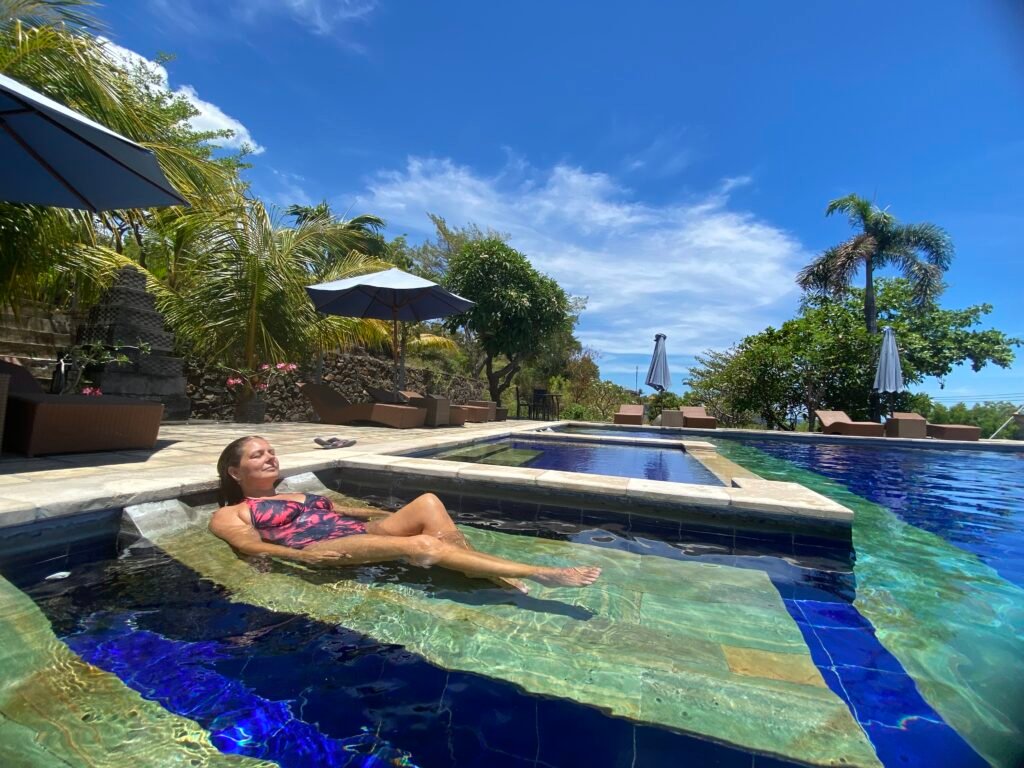
We’d loved the pool at our Ubud hotel, but this one easily rivalled it: spotless, well-kept, and with an infinity edge looking straight out over the ocean.
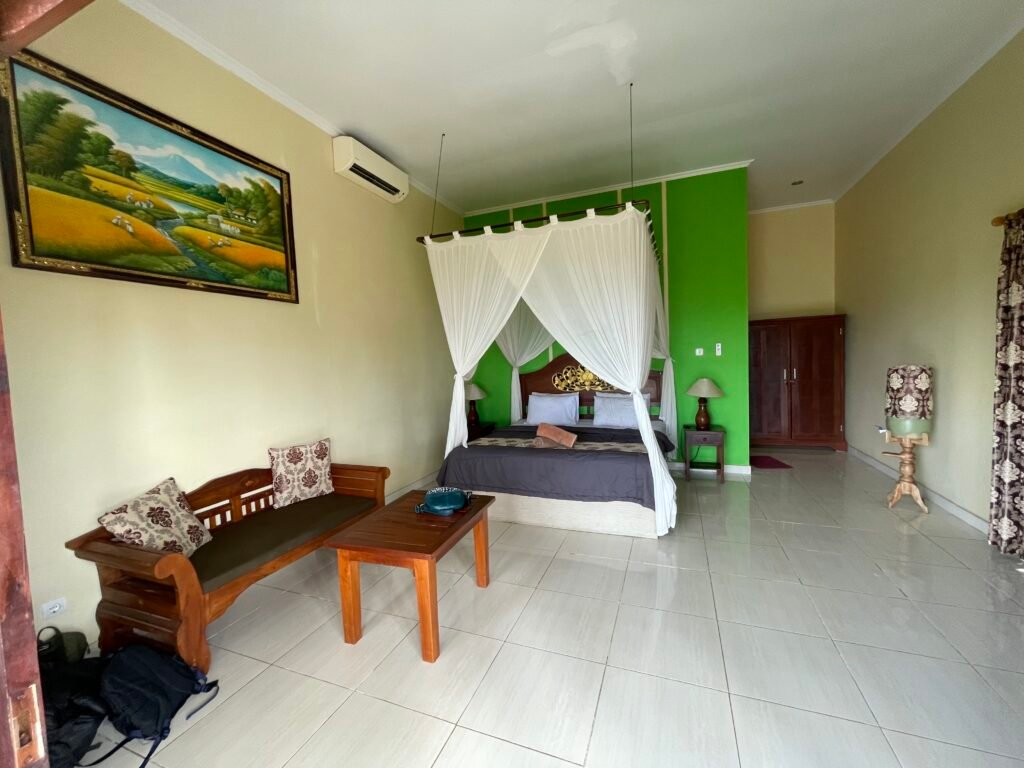
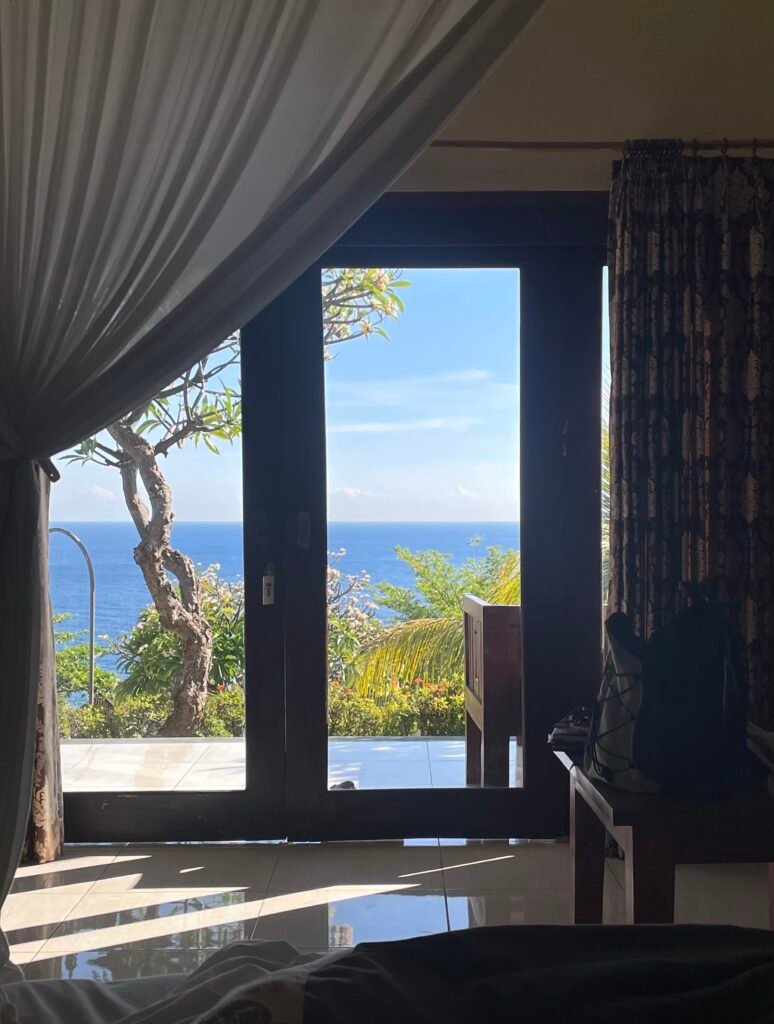
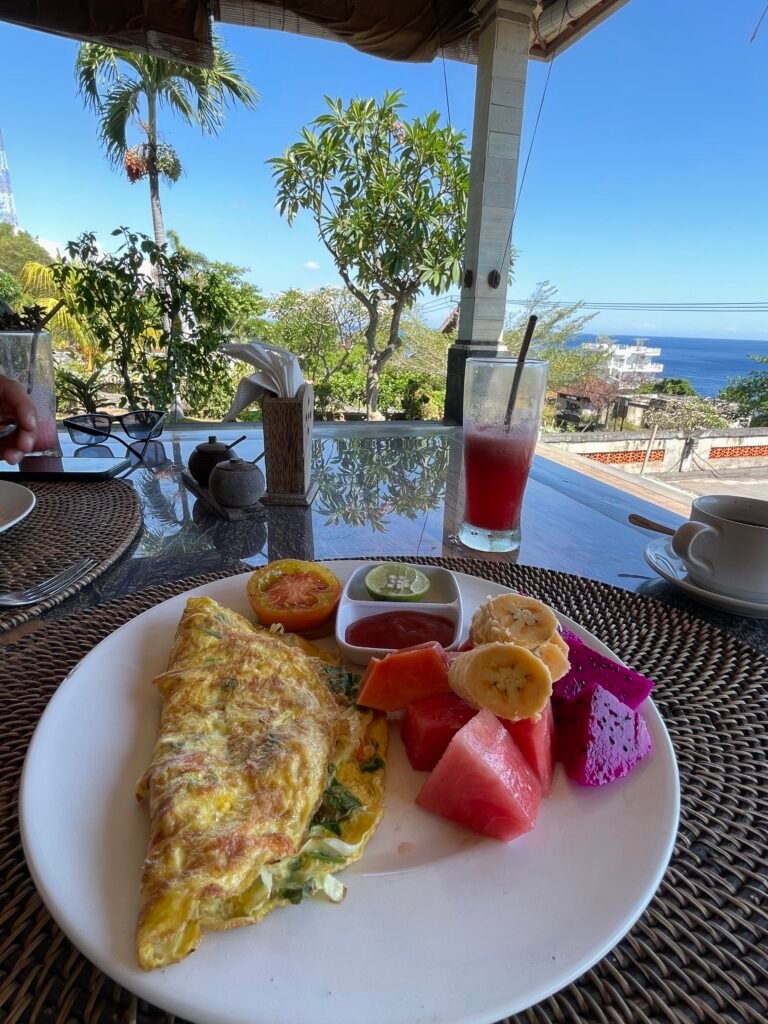
As usual, we’d opted for breakfast included (because, well, value for money!). Even the simplest hotel breakfasts in Bali are usually enough to set you up for the day, but here the options were superb — especially the veggie omelette with fresh fruit and a watermelon juice, although the coffee took a bit of getting use to.
We stayed at The Bali Bhuana Villas.
Scooters, snorkels and sunsets
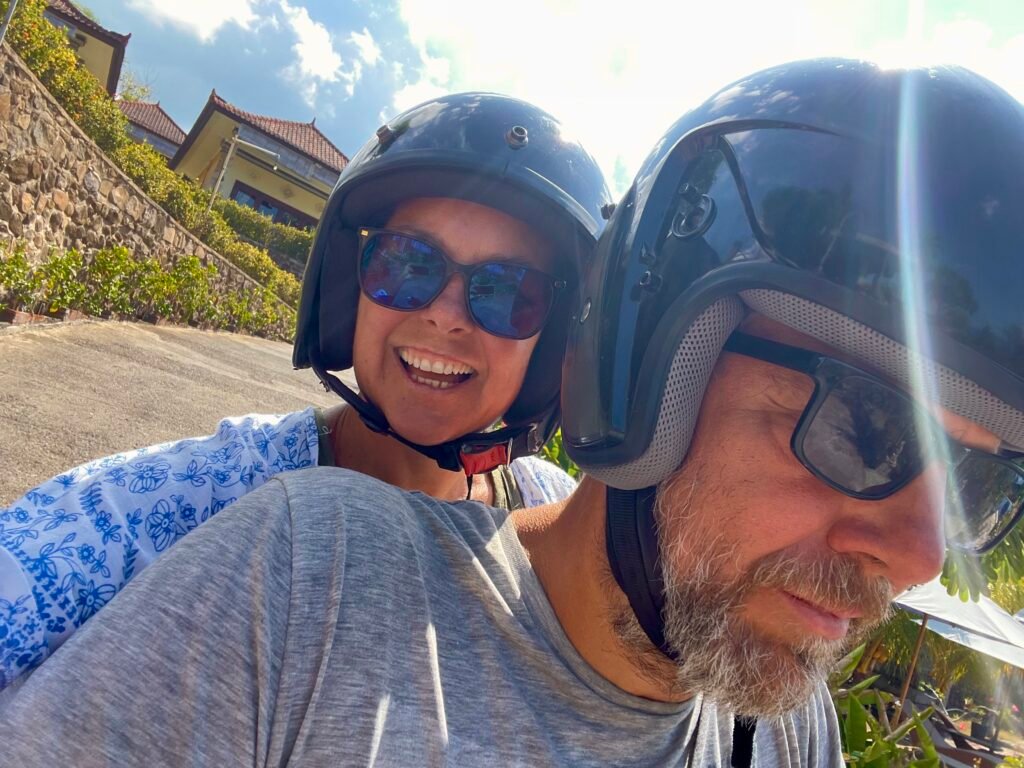
Wayan arranged a scooter for us which cost about £4 a day, and since Amed is much quieter than lots of Bali, we felt comfortable riding around. It gave us the freedom to explore snorkel spots, hidden beaches, and seaside warungs. The roadworks kept things interesting, but it was all part of the adventure.
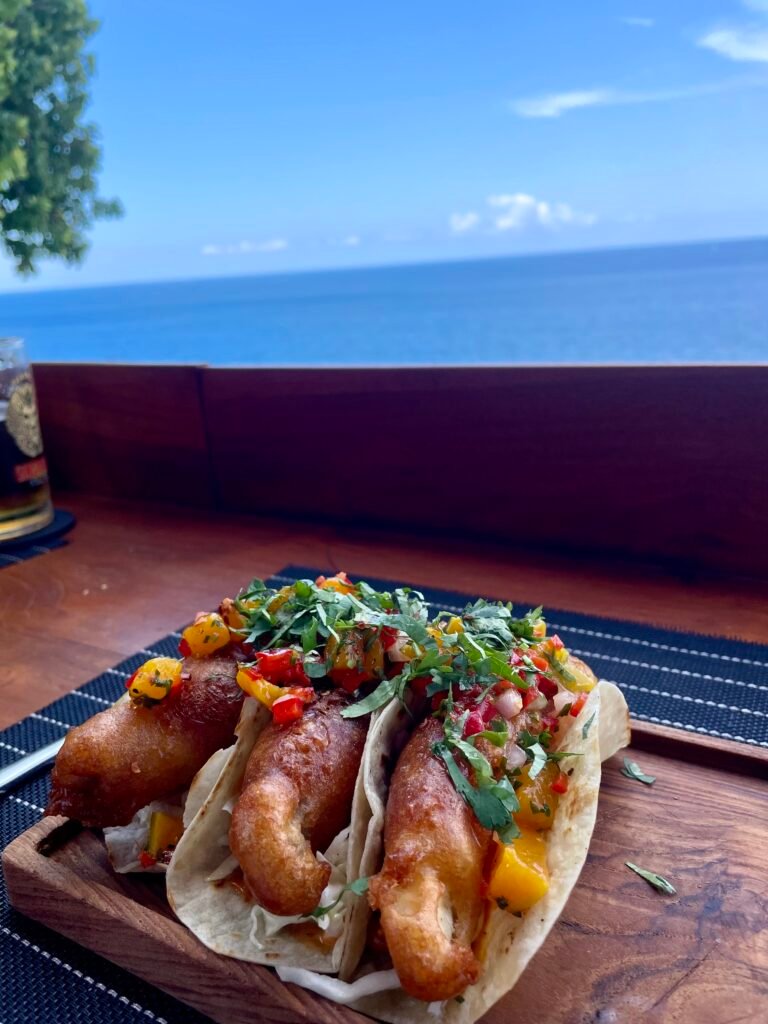
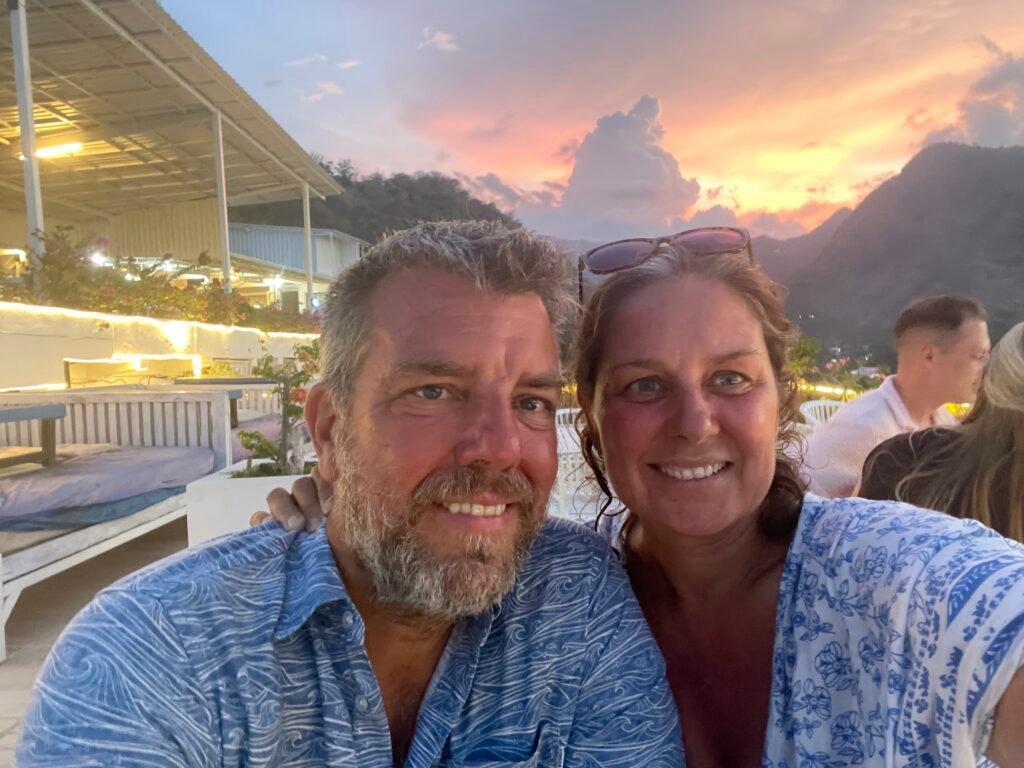
Food was a mixed bag, some meals were just okay others excellent, but prices were low across the board. One unexpected highlight was Sunset Point Beach Club. At first, we balked at the £15 entry fee, but it turned out to be redeemable at the bar or restaurant. With chilled music, a cliff-top infinity pool, a swim-up bar, and beanbags facing the sunset over the volcano, it felt like a slice of Seminyak luxury hidden in laid-back Amed. After a couple of large G&Ts and a plate of potato wedges, we left feeling it was money well spent
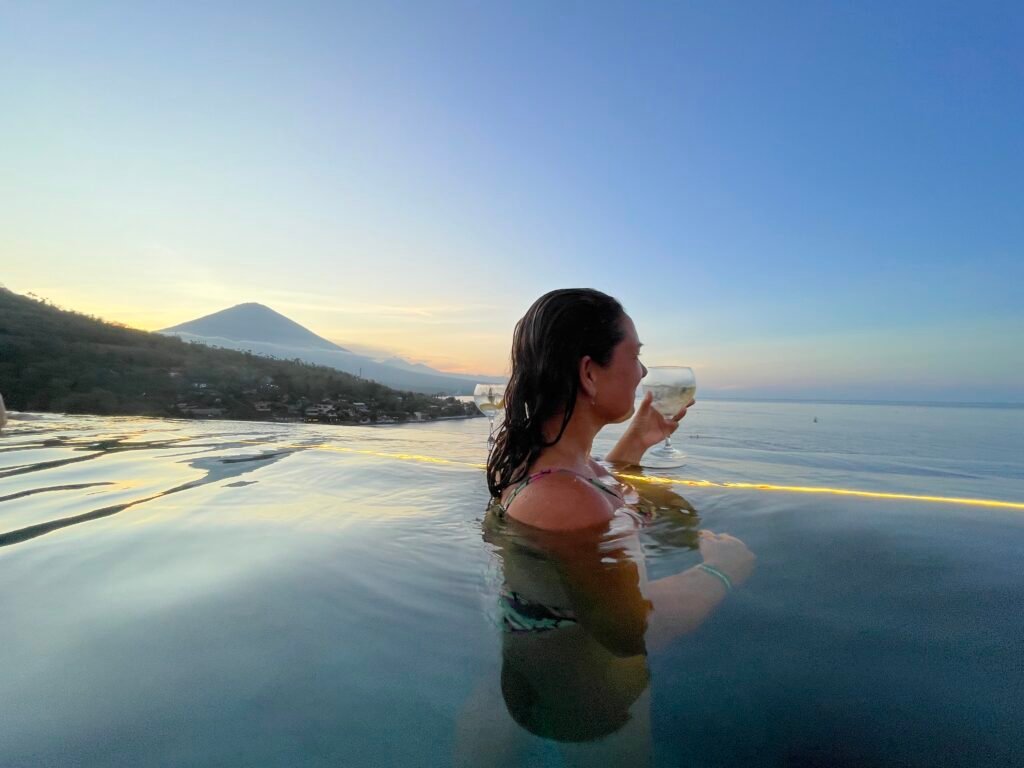
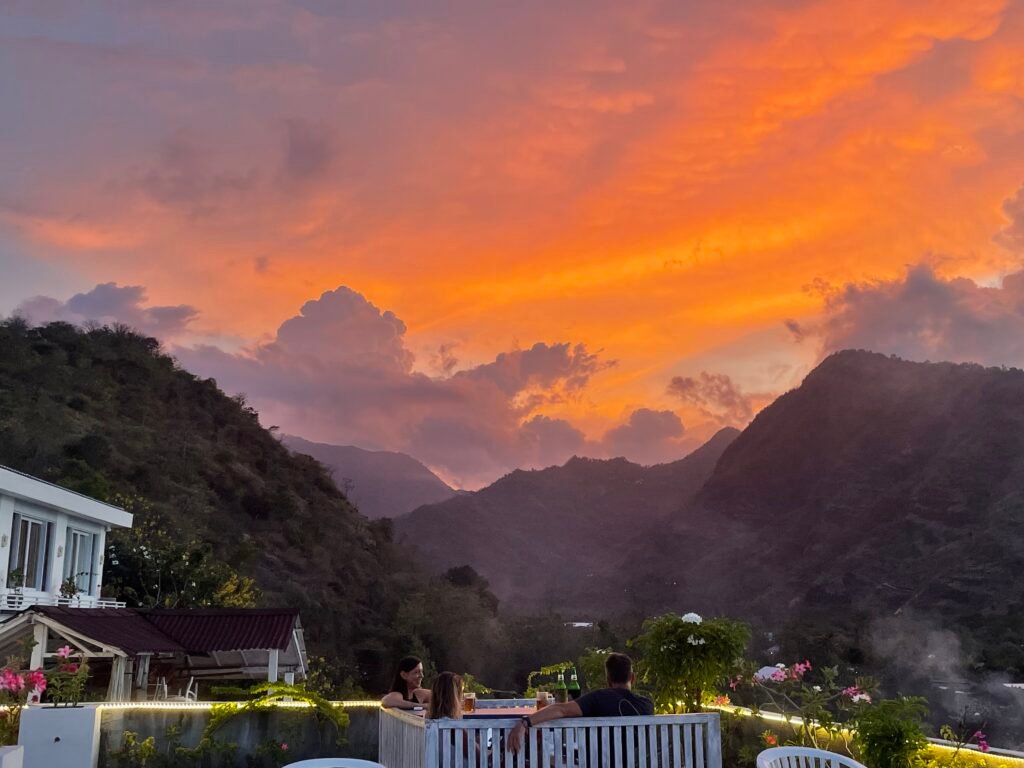
Our plan in Amed was simple: swim and snorkel as much as possible. Unfortunately, we’d left our decent snorkel gear at home (rookie mistake combined with a 7kg allowance). The the cheap masks we bought from the local mini-mart were predictably rubbish, but still, they did the job.
The snorkelling along the Amed coast exceeded our expectations — vibrant coral, plenty of fish, and clear water. It really was like an aquarium. Even at the popular beaches like Lipah and Jemeluk, the reef was in great shape. We also visited the small Japanese shipwreck, but rougher seas meant visibility wasn’t great that day.
One note: most beaches here are rocky or coarse black sand, so water shoes are handy. We were too stingy to buy any (£8 a pair seemed steep!), and while I managed with my flip-flops, it was quite the toe workout trying to keep them on underwater!
Moving on
Our five days in Amed flew by. We could easily have stayed a month, but the Gili Islands were calling — with promises of even more great snorkelling ahead. Reluctantly, we packed our bags once again and set off for the next leg of our journey.