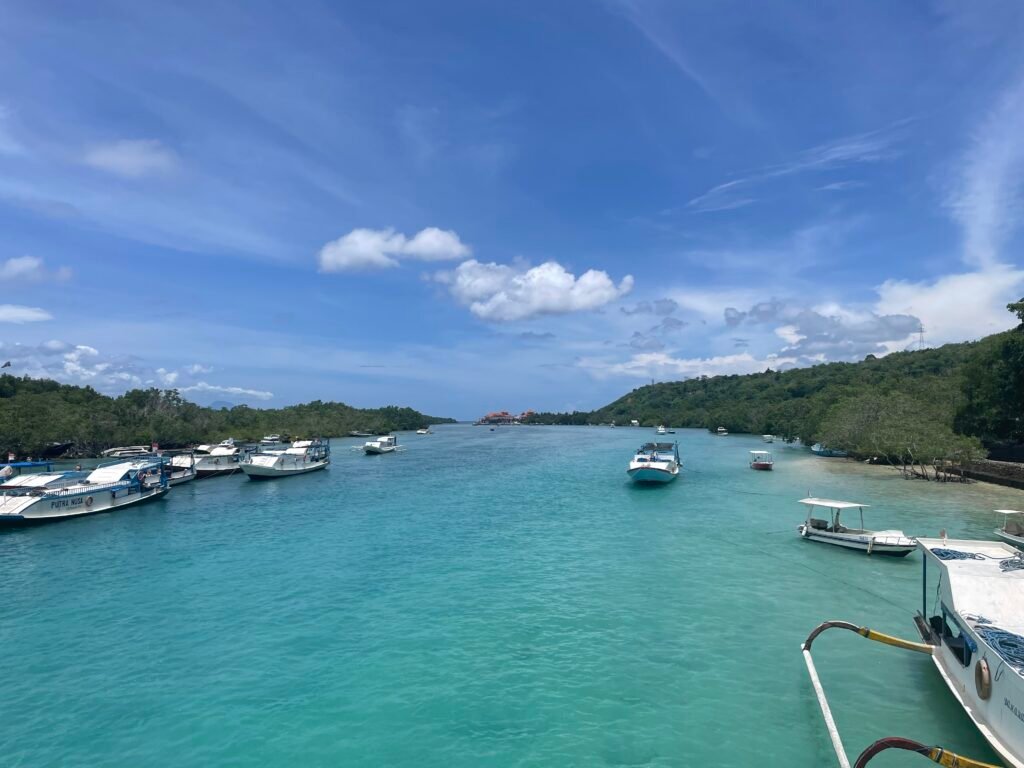
A short hop to Lombok and the rice fields of Rinjani:
Getting from Gili Air to Lombok’s Bangsal Port is an easy hop, about 10 minutes by speedboat or 15–20 minutes on the public boat. The harbour on Gili A is full of ticket kiosks and the usual touts vying for attention. Somewhere in the melee, I’m sure, was the elusive public boat ticket counter, but we ended up choosing the quietest kiosk we could find and agreed on a fare that included a private transfer to Tetebatu, our next stop, and cost about 800,000 IDR. Considering the taxi ride would take around two hours, it didn’t seem too bad.
I’ve spent a fair bit of time on boats, owned a few, and done some pretty hairy (often stupid) things on and around water, but the “fast boat” to Bangsal ranks high on the list of interesting crossings. The small boat was three-quarters full with just ourselves, three crew and two other passengers who’d brought a mountain of luggage. I’d noticed the twin 100hp outboards on the back and thought, “Plenty of oomph.” And it was, both engines were opened up to full throttle the instant we left the dock, and stayed that way until seconds before we hurtled to a stop in Bangsal.
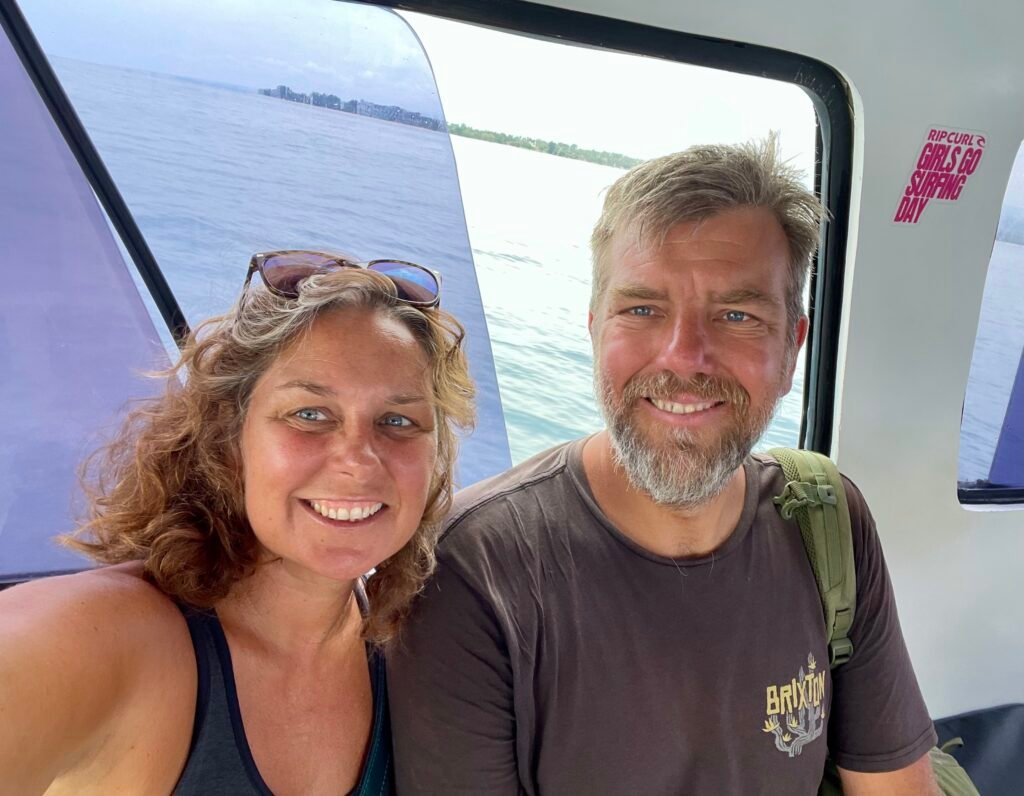
The boat planed perilously along, bouncing over swells, narrowly missing other craft, all while the captain texted his mates, made a few phone calls and fiddled endlessly with his phone holder, rarely with either hand on the wheel. Needless to say, I was rather relieved when we finally moored up (four abreast at the dock) and lugged our bags across several other boats to reach dry land. Tara was helped with her bag, which was whisked off and held hostage until an acceptable tip was handed over.
Naively, we’d pictured a smiling driver waiting eagerly at the harbour with his shiny, air-conditioned car ready to whisk us away into the mountains. Not quite. Instead, we were greeted by a guy who spoke little English but guided us to the back of the port building, where we joined several other lost-looking tourists while “our car was arranged.” It wasn’t a long wait, maybe 30 minutes, but in the sticky heat it felt like forever. When Juice and his brother Jimmy eventually turned up in their battered old Toyota, we were just happy it had four wheels and functioning air con.
Tetebatu – Hidden waterfalls, rice fields and monkeys.
As always in Lombok, progress was slow. Between the winding mountain passes and the chaos of busy streets, the 20-odd kilometres took well over two hours. Juice and Jimmy were great though, friendly, chatty, and being locals from Tetebatu, they knew all the shortcuts.
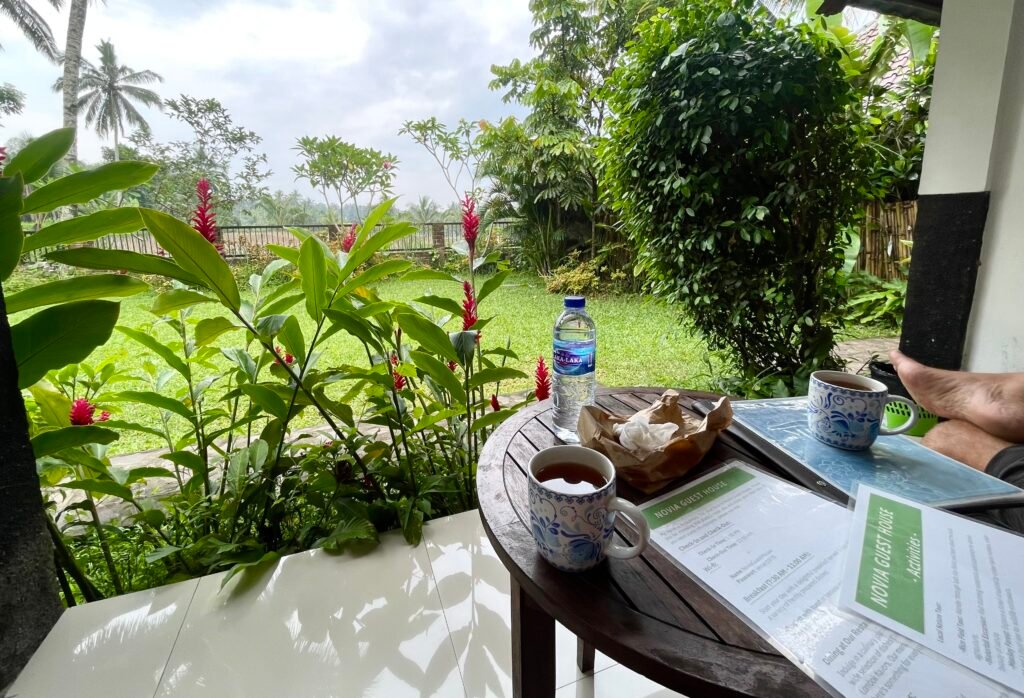
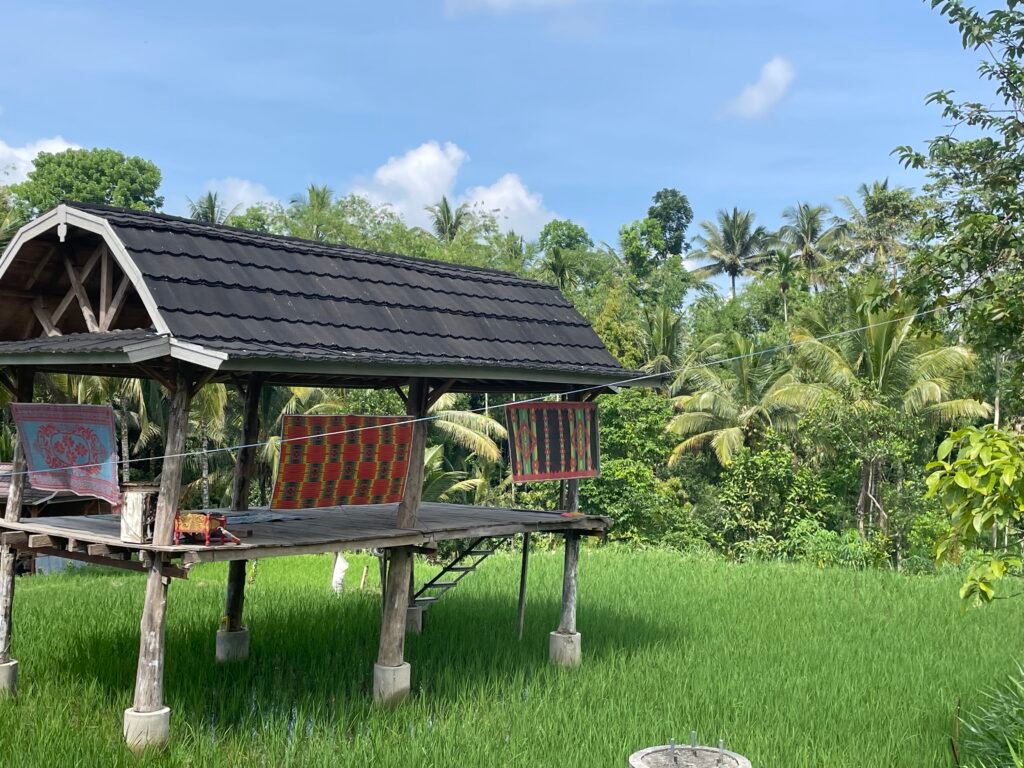
Our Booking.com search had led us to a simple but clean and tidy small hotel called Novia Guest House. Set just outside the main village, it overlooked lush rice terraces and (supposedly) had a view of Mount Rinjani, though it stayed firmly hidden behind clouds for our entire stay. The hotel ticked all our boxes: AC, cleanliness, and a comfortable spot to chill. The little restaurant had excellent reviews too, as did their in-house guide, Andy, who we booked for our only full day exploring the area.
You’d be forgiven for thinking all was set for a few peaceful days relaxing in mountain serenity: cool air, birdsong, maybe a good book. Oh no, at 7pm, just as we were settling in, the call to prayer began. Normally we quite like the sound, a distant echoing reminder of place and culture, but Tetebatu has nine mosques, all crammed onto the hillside, and all operating perfectly in sync. What started as a gentle chorus quickly became a full-blown sound clash, each mosque seemingly trying to out-volume the others. The highlight came when someone handed the microphone to a small child and we were treated to twenty minutes of… enthusiastic recitation.
At 4am, the whole thing started again. Needless to say, another night’s sleep was written off.
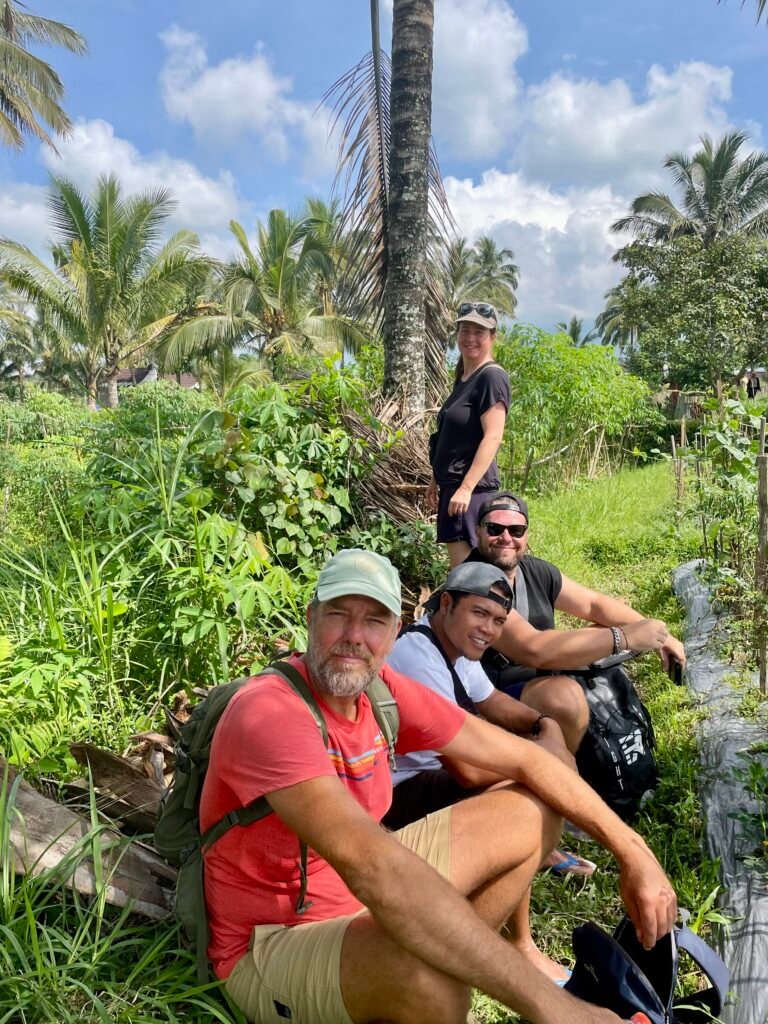
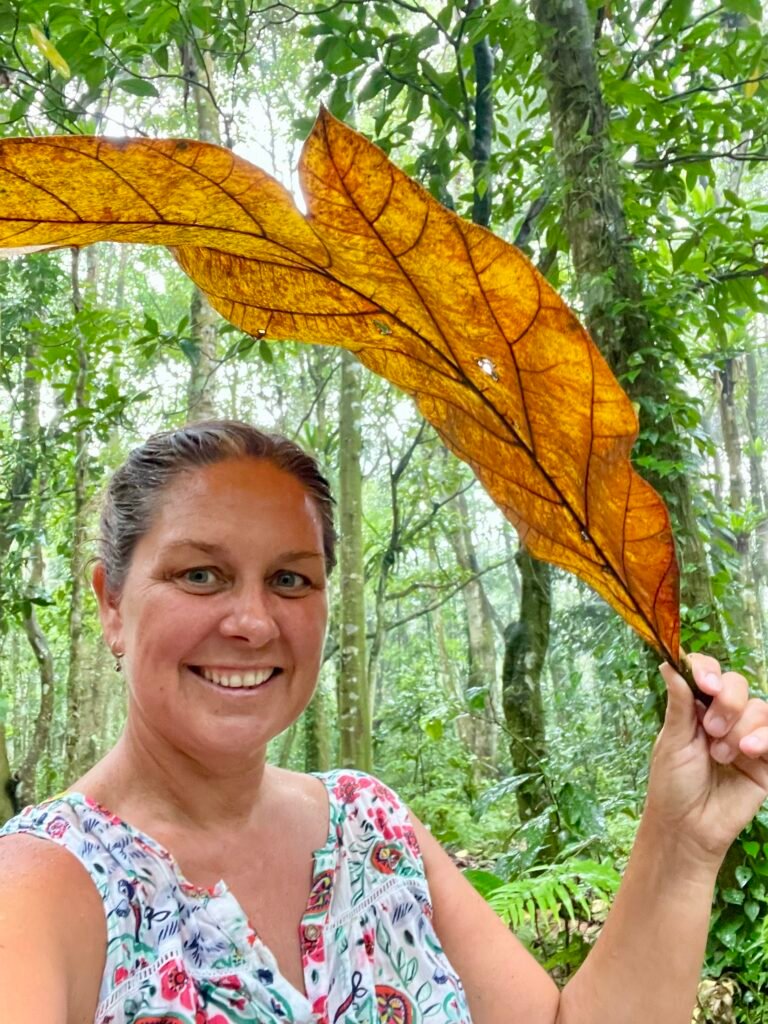
Breakfast the next morning was good though, the usual eggs, fruit and pancakes, washed down with strong Lombok coffee (we gave the rice or noodles a miss for once). By 8:30 our guide Andy had arrived, along with our Swiss companions for the day. Our plan: trek through the rice terraces, visit the hidden waterfalls, and explore the monkey forest in search of the local black monkey.
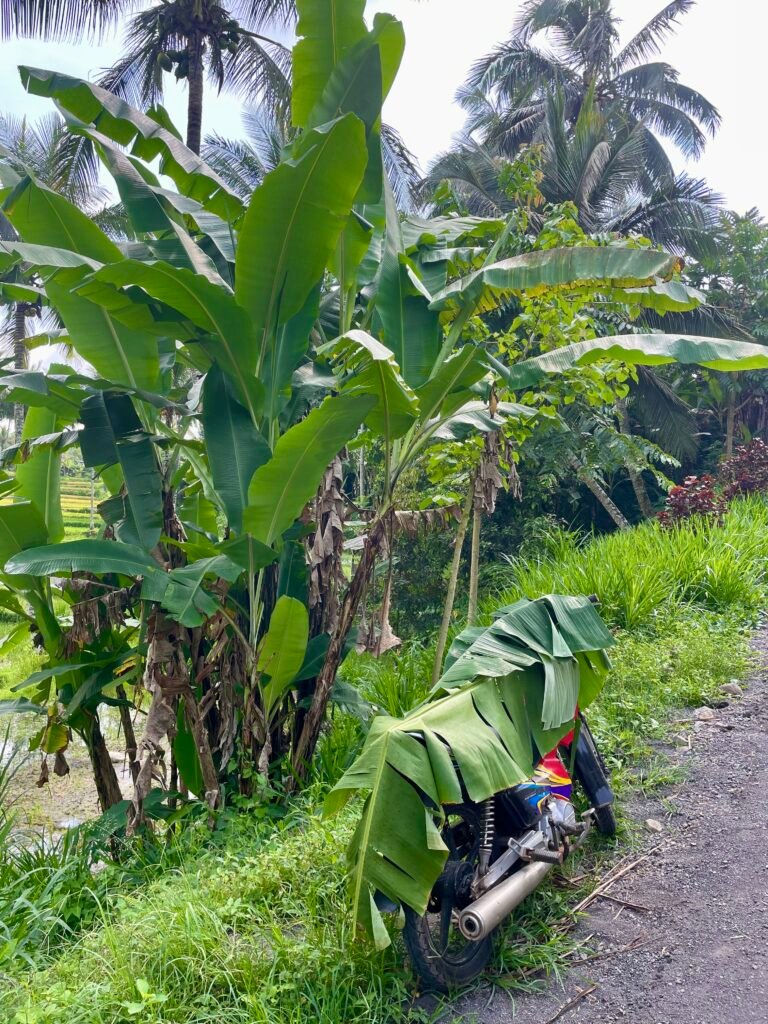
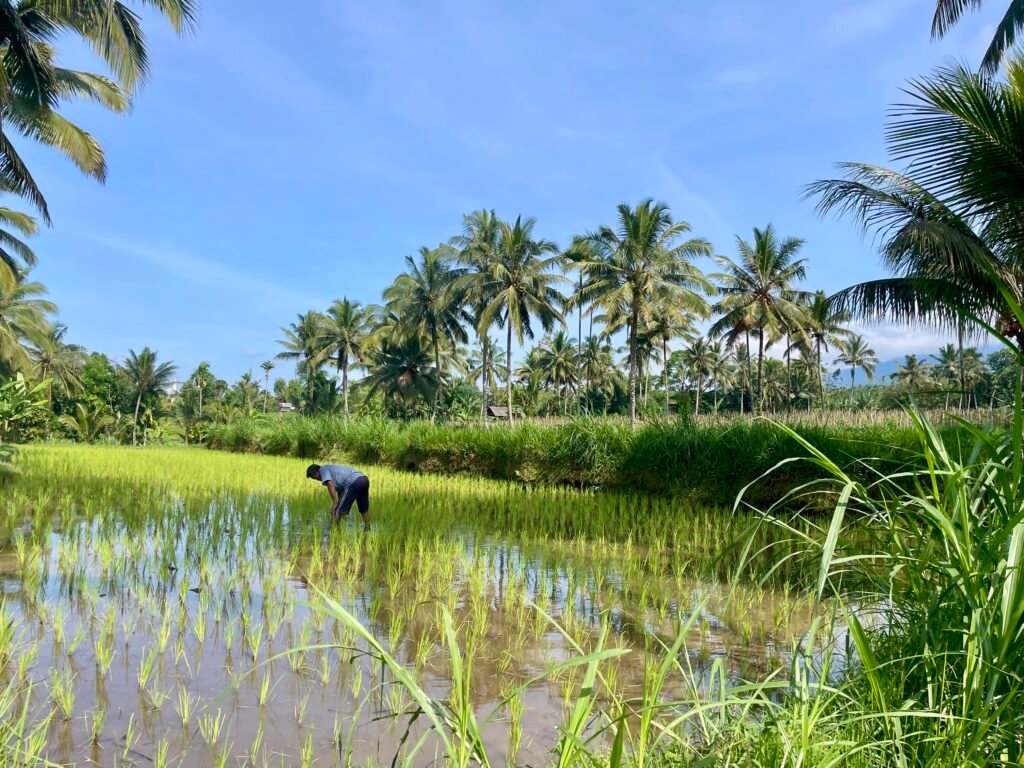
Andy was fantastic, knowledgeable, funny and clearly passionate about local culture, farming and wildlife. He constantly pointed out plants, fruits and spices as we walked, making us realise how much we usually miss. I was blown away by how labour-intensive rice farming is, and how cleverly they mix different crops to protect against pests and disease. Seeing the farmers bent over in the fields, knee-deep in water, was humbling, I’ll definitely think twice about ever wasting rice again.
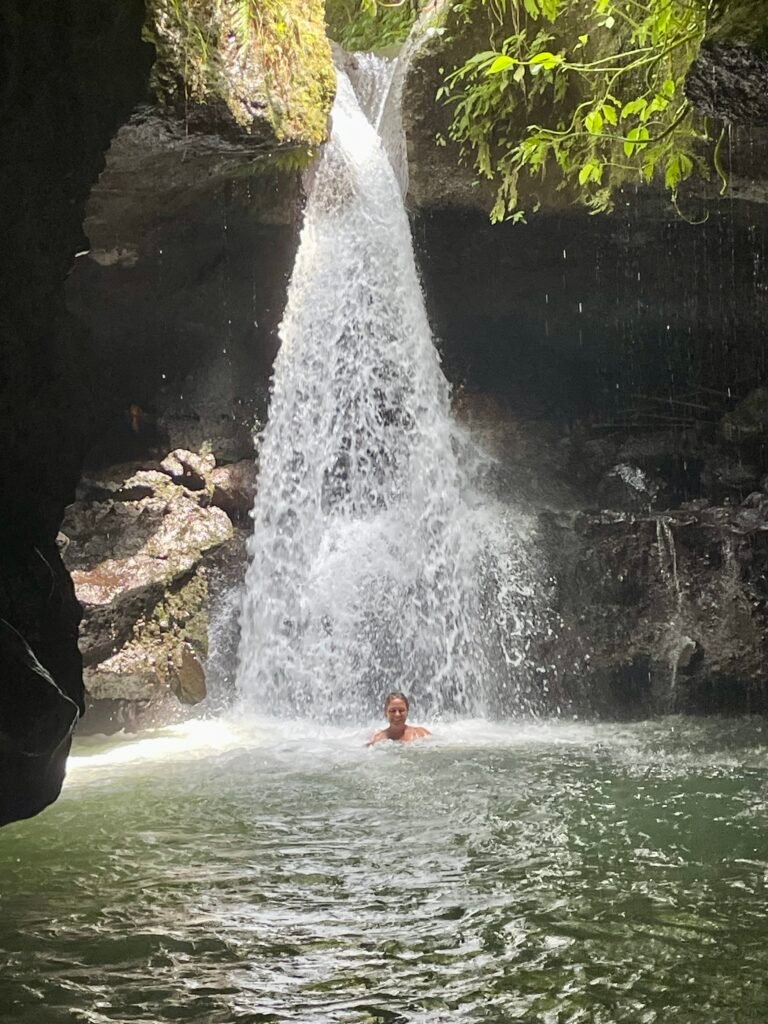
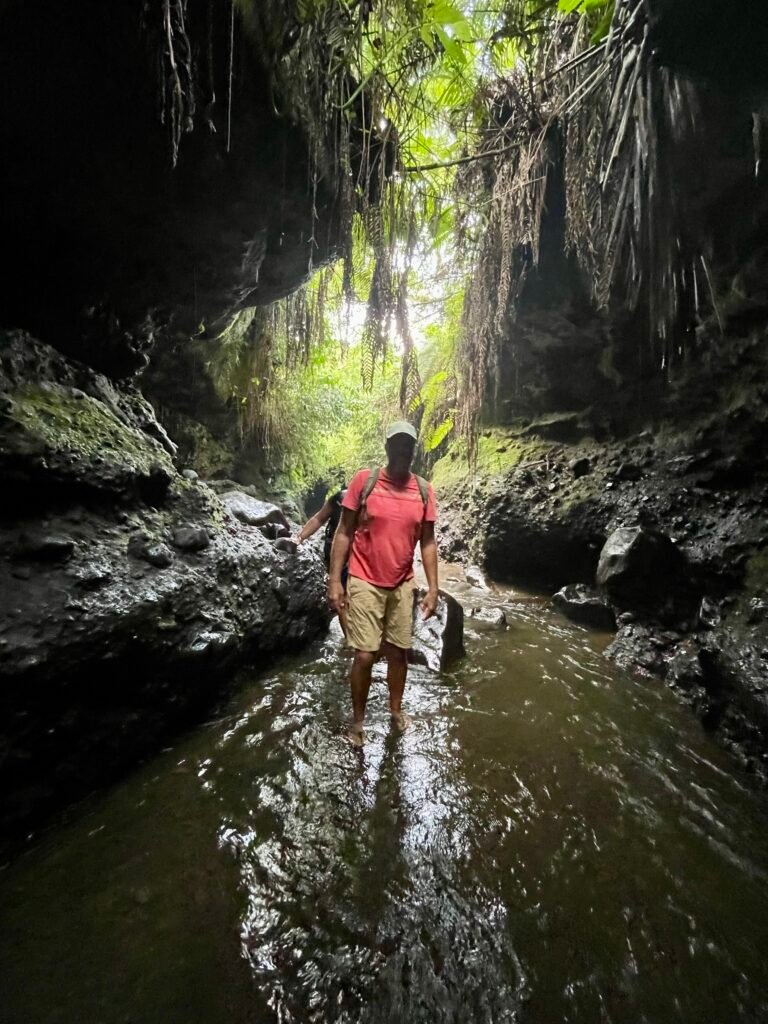
Our next stop, Tetebatu Waterfall, didn’t disappoint either. It’s not the biggest or most dramatic, but its setting in a cave-like gorge makes it special. Anyone planning the trip should definitely bring water shoes, (it’s a slippery scramble through the river and over rocks) and a swimsuit for the small pool at the base. Perfect for cooling off.
Lombok was edging into rainy season so it wasn’t long before the heavens opened. We stopped for a quick coffee and picked up some local spices before pressing on into the forest to hunt for monkeys. As the rain intensified, Andy warned that they’d likely move higher up the trees so we’d have to go deeper into the forest, added to that the softening trail would make the walk tricky.
By the time we found them, we were all soaked to the skin. The black monkeys were high up in the canopy, perfectly camouflaged, but still a great sight to see. The grey monkeys, on the other hand, were far less shy, loud, territorial, and not afraid to put on a show. Andy assured us they weren’t aggressive, though they certainly liked to act the part.
The forest itself was beautiful, and walking through it in the rain gave it a mystical feel, although our Swiss friend and I both had to pull a few leeches off our legs, which was a new experience I’d happily not repeat.
We ended the day drying out at a little warung, chatting with our fellow travellers. By the time we got back to the guesthouse, we were shattered, ready for a hot shower, further leech inspection and a proper sleep. Luckily, the long hike did the trick, even with the 7pm and 4am “auditory onslaught”, we managed a few solid hours of rest before tackling our next challenge: the visa extension.
Madness of Mataram to serenity of Sundancer
We’d been well looked after by Andy and Hiru of the Novia Guest House, and despite another disrupted sleep, we felt fairly rested and ready tackle the next obstacle, our visa extension:
The Bali flights had been booked on a bit of a whim, knowing that after our WA road trip we’d fancy a few weeks R&R to reset and ready ourselves for phase two of that adventure. As ever, being budget conscious, we’d simply plucked the cheapest flights off the Skyscanner calendar and booked, our stay would be 34 days. We really, maybe naively, didn’t think about the visa implications until a few days before we’d been set to fly out. The visa options seemed pretty straight forward, 30 days visa on arrival, 60 days longer visa, and other multi trip longer term visas. We opted for the online application for the 30 days visa which was accepted but needed to be completed with payment at the airport. We’d realised that we’d need to extend our visa to cover the extra 4 days over the 30 we’d be staying but assumed that this was an online formality and the cost would be similar to applying for the more complicated 60-day visa.
Realising we’d need to get the extension sorted we’d done the usual 1000 hours of YouTube research and googled the question to death, finally coming to the understanding that the online application also required a visit to the ‘local’ immigration office for biometrics, an interview and potentially other administrative checks. The online consensus was that this would take from anywhere between one ten minute visit, to three visits over a five day period! Trying to understand why, after taking our photo and details at the airport on arrival, having a copy of our passport and the details of our return flight, the immigration officials would need to see us in person to give them all the same details again, was beyond us.
So, dutifully we jumped in another battered old Toyota, this time without AC, for the two hour trudge into Mataram city.
Mataram – immigration centre
As had become customary, the journey to Mataram was slow and frustratingly congested. As we approached the city the scenery changed from lush forest and rice terraces to row after row of shops, warungs and scooter repair places, all looking half built or half fallen down. Fortunately the driver dropped us right at the immigration office and we quickly found our way to the thankfully well air conditioned, second floor international visa office. We saw clearly that the extension process is a regular occurrence here with signs in English showing the process we’d need to follow and details of exactly what happens and where.
We’d already filled out the online extension application and paid the 500,000 IRP fee, which is simple enough. There are loads of agents who’ll help fill out the form for a fee and others who claim to handle the whole application process for you, again for a fee. My advice is to avoid these and do the application yourself as which ever way you go, you’ll still need to visit the immigration office for your biometrics and interview.
The office wasn’t busy, only a couple of tourists patiently waiting, and we were seen by an official straight away. Our passports handed in, we were given a ticket and told to wait. Literally, less than a couple of minutes later we were each called into a side room for ‘sit down chat’ quick photo and then happily sent on our way. No return in three days, no collect your passport next week, just a recommendation to call or email if we didn’t get our visa approval within five days.
Total time in the immigration building 15 minutes including a toilet stop and google maps search for the nearest shop or cafe to grab a drink.
Clearly, we had a very simple and stress-free application but understand that others may not be processed as swiftly, however if our experience is anything to go by, we’d say don’t worry. Although the fact of having to go to the office is ridiculous and takes a day of ‘holiday time’, it’s a simple process and not stressful in any way. Definitely don’t hand over your passport to some geezer who’ll fix it for you for a small fee, you’ll still be taking the trip Mataram!
Heading south to the Sundancer Resort
Our efforts to find a cafe or shop were totally unsuccessful, we’d fancied somewhere cool to sit and regroup for the journey south, expecting the city centre to be organised and I guess a little ‘westernised’. Other than an indoor fish market and loads of street side vendors we didn’t find anywhere we fancied. I’m sure there are places, but our stamina was low and we wanted to get on the road quickly, so I turned to my Grab app and requested a cab.
The journey to the Sundancer resort was listed as around 1 1/2 hrs and to my surprise the request was picked up within seconds. Two WhatsApp calls later and to my frustration the driver requested I cancel the booking as it was too far! This is often the problem with Grab and its western equivalent Uber, drivers take on the job and then drop it after you’ve been waiting for them to arrive. It’s my pet hate with the system which in most other respects is a great and useful resource.
After another attempt we were quickly picked up by Rudi, another gem of a driver who took time to practice his English while talking to us about his country and his own aspirations. I think he was enjoying the drive just as mush as we were since the closer we got to our destination, the slower he drove. Rudi assured us that our hotel was real top notch, telling us that he could only dream of staying there. We felt pretty bad since even after pushing our nightly budget to £34.50 the accommodation was dirt cheap by UK standards. It served to give us a little perspective, but when we got to the hotel our minds were blown.
Sunrise, Sunset, Sundancer
We’ve become accustomed to more budget-friendly hotels since starting The Roaming Reset, and the Sundancer Resort definitely pushed our boundaries. Our budget cap was tight, but we’d managed well so far in Indonesia and had generally been pleasantly surprised by our accommodation. The photos and description on Booking.com made this large resort look special, though the 7.7 review score (after being burned by dipping below an 8.0 at Salabose Cottage) had us slightly wary.
From Mataram, it’s a good 90-minute drive to the resort, set on the coast near the “Secret Gilis” — Nanggu, Tangkong and Susak. Gili Gede is about half an hour away, while Kuta sits roughly an hour and a half to the south. The hotel’s fairly secluded, surrounded by small villages and a few shops, with Lembar Harbour nearby offering ferry connections to Bali.
We’d booked a Grand Residence and, thanks to our bookings.com Genius upgrade, were bumped up to the Deluxe. The full kitchen and comfy lounge were the big draw — after a month of eating out, we were desperate to cook something, anything, ourselves.
Check-in came with a welcome drink and cool towel, and a concierge whisked our bags to the room. Ours was conveniently close to the lobby and pool so no need for the “complimentary transport” used by guests staying in the hillside villas. The pool itself was enormous, one of the largest we’ve seen, with plenty of loungers and shade. The swim-up bar was sadly closed (off-season blues), but the setup was still impressive.
The resort offered plenty of facilities: a beach club, sauna, Jacuzzi, spa, restaurant, bar and a small shop. The room didn’t disappoint either: a spacious lounge and kitchen with marble counters, sliding doors to the bedroom, and a generous bathroom with twin basins, bath, shower, and dressing area. There were a few minor maintenance issues, but crisp white sheets, fluffy towels, and thoughtful touches made up for it.
Crossing the road to explore the beach club, we were pleased to find it open but disappointed by the littered beach. Understandably, the tides bring in daily rubbish, but with so few guests around, a quick clean-up wouldn’t go amiss. We stuck to the pool instead — clean, quiet, and relaxing.
Our five nights flew by in a haze of space and relative luxury. Breakfast was the best of the trip, with three mix-and-match menu “plans” — we quickly settled on eggs Benedict with fresh fruit, pastries, and a smoothie bowl on the side. Sadly, local dining options were limited. Even with a scooter, restaurant choices were sparse. A nearby beachfront “resto” offered edible food but also a few furry spectators dashing between the kitchen roof and trees — not exactly appetising.
We’d hoped to make use of the kitchen but struggled to find ingredients. Local shops mainly sold rice in 10kg sacks, so we settled for noodles and veg one night. Not gourmet, but at least it was home-cooked. The hotel restaurant’s food was decent but two or three times the price of local eateries, so we’d definitely bring snacks (and maybe a bottle or two) next time.
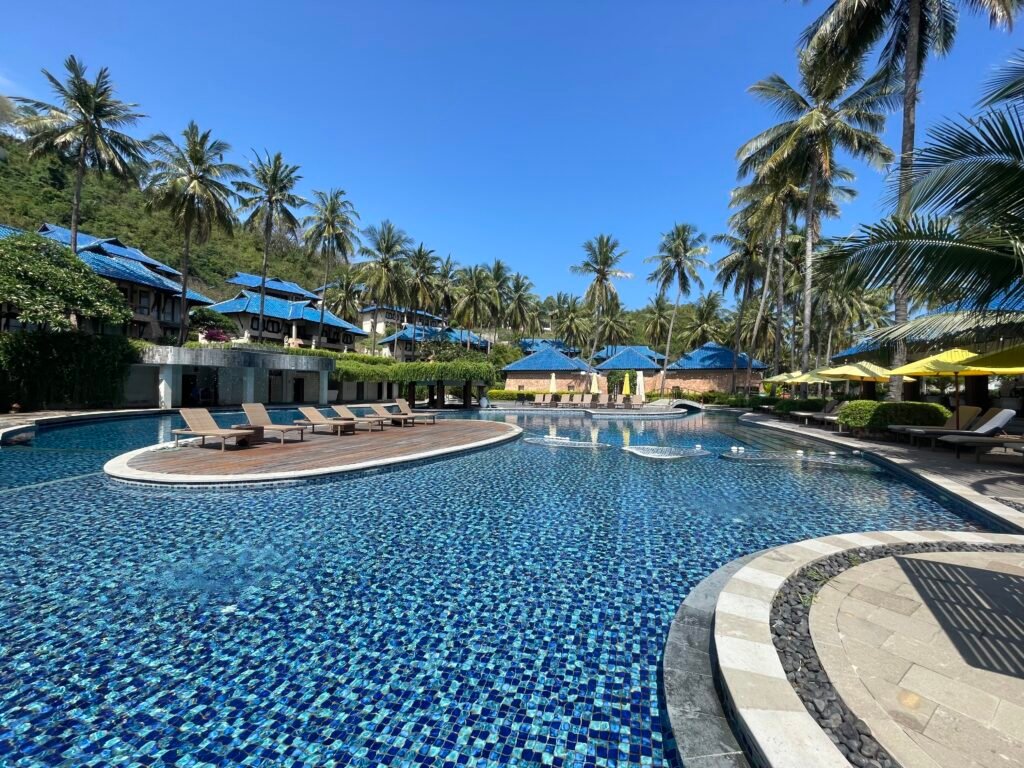
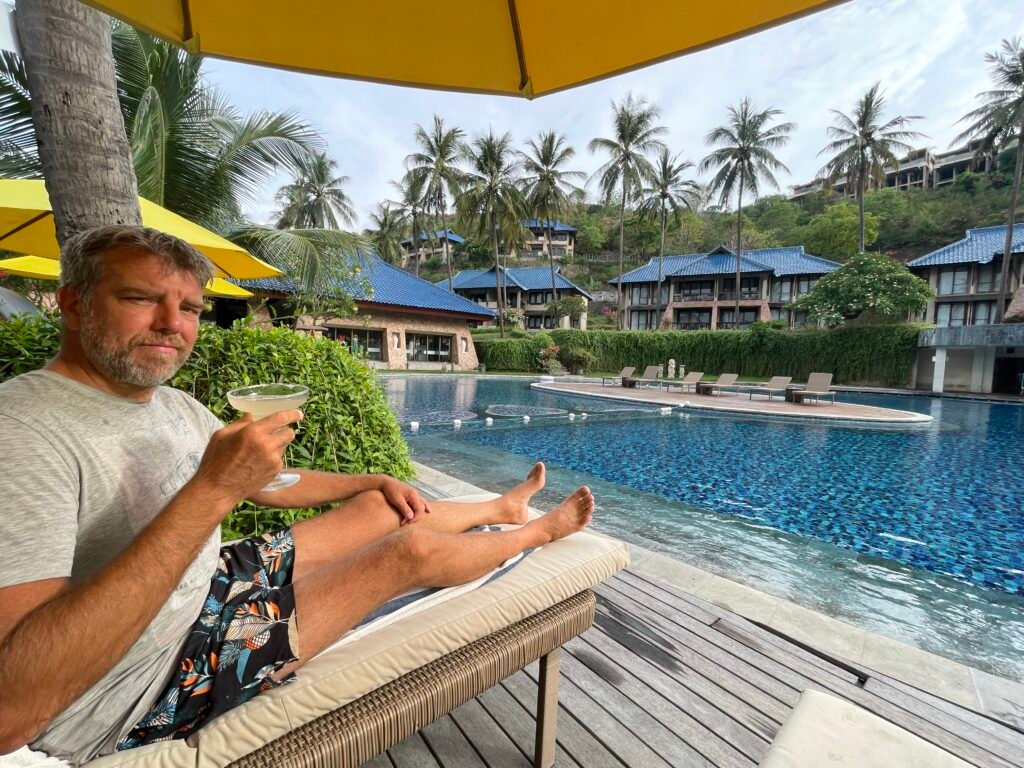
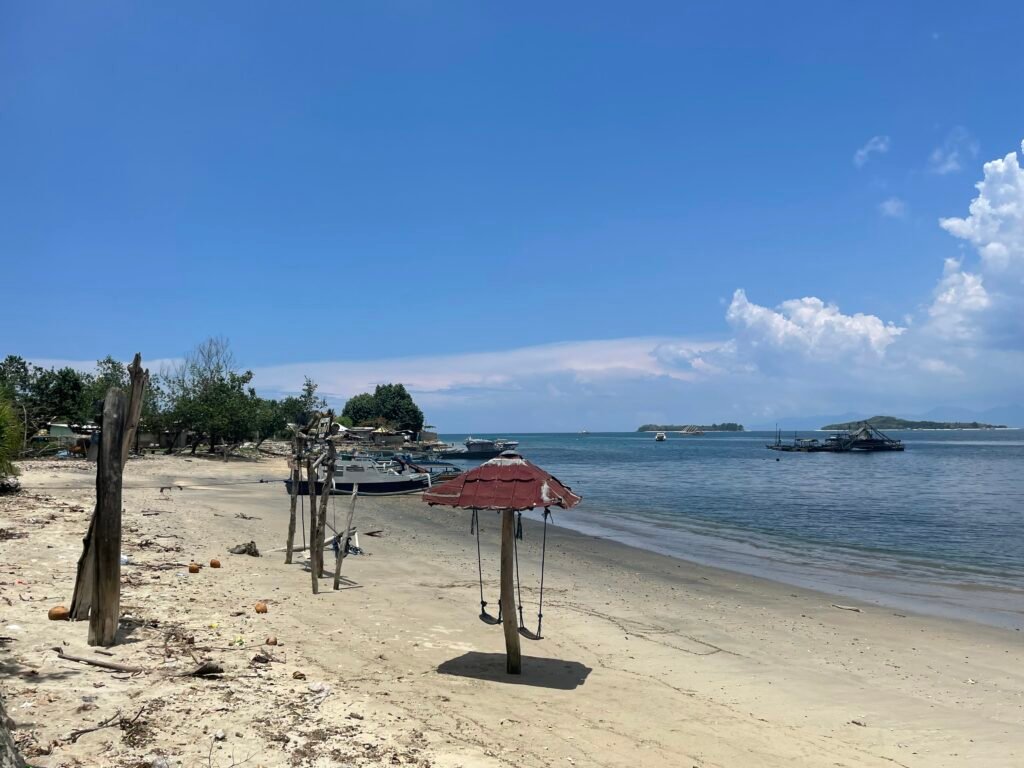
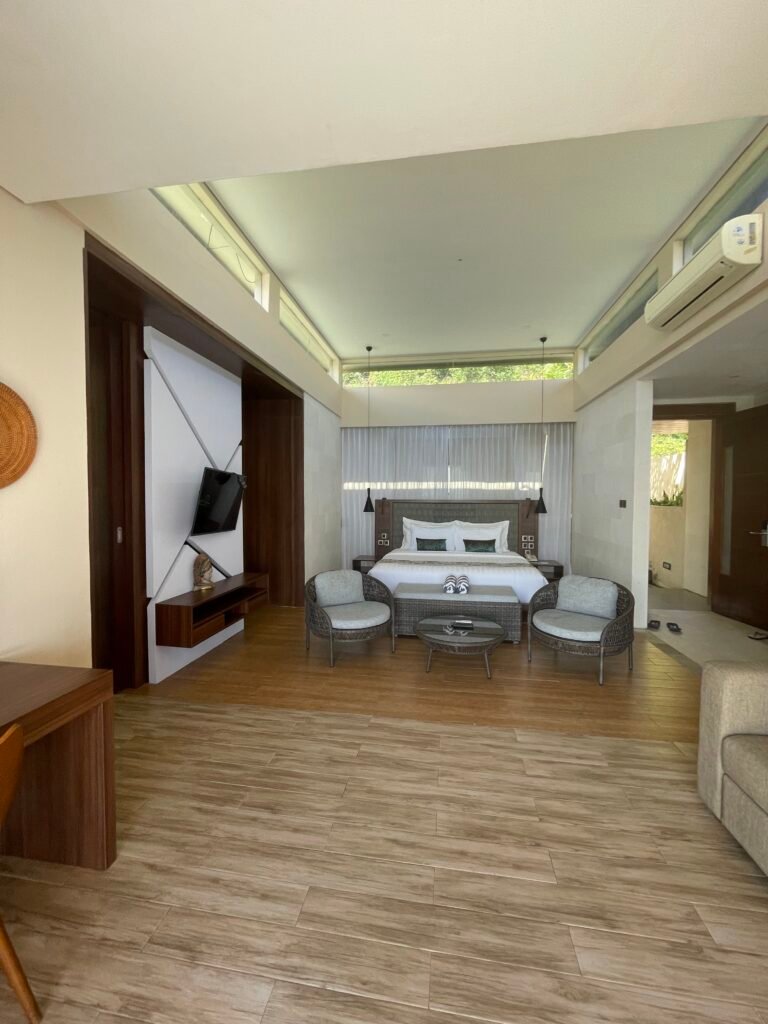
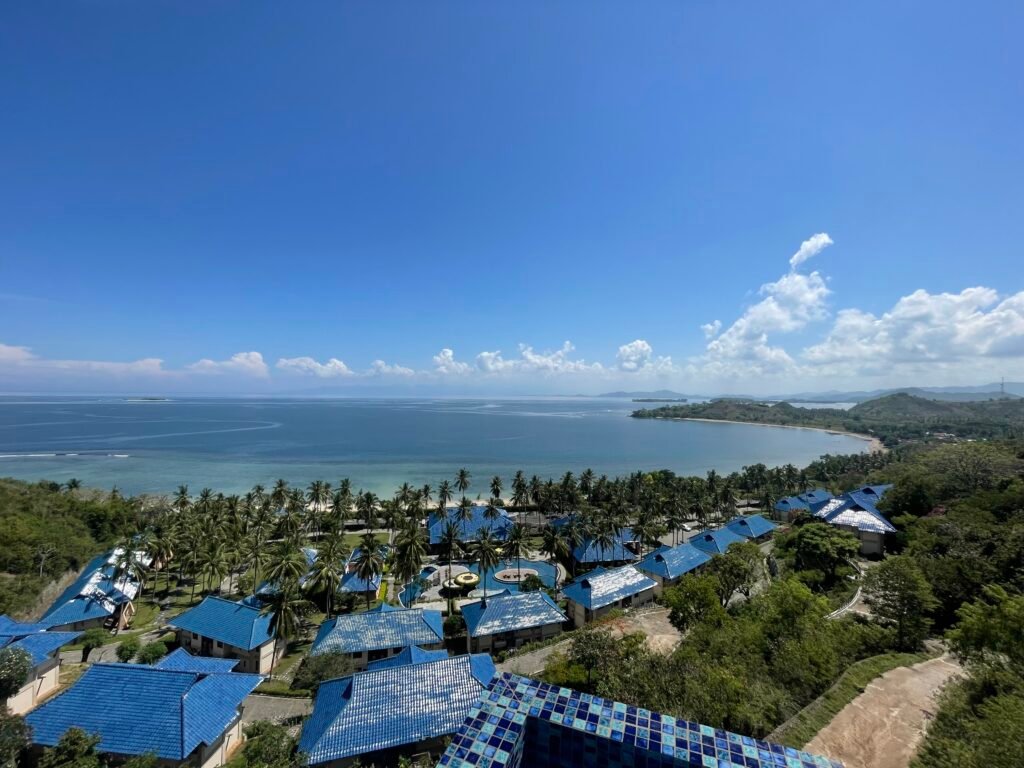
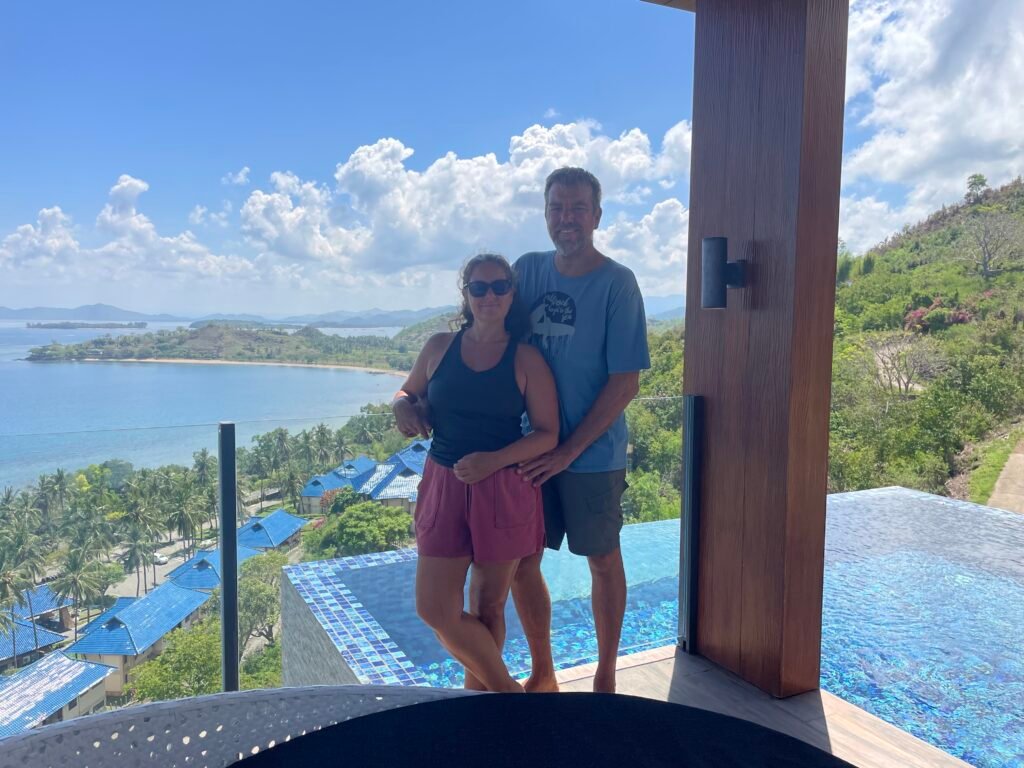
Overall, the Sundancer offered incredible value for money. It’s showing a bit of wear around the edges, but for anyone craving a touch of luxury without the price tag, it delivers. Bring supplies, rent a scooter, and get out exploring. The area’s stunning, and the staff are wonderful.
The downside of the Sundancer wasn’t the resort itself but its location, not just while we were there, but in trying to leave. Like the land of the Lotus Eaters, it seemed determined to keep us forever.
Read the final blog (Part 4) as we leave Lombok behind and head for the last Island adventure of our Bali and Beyond trip.