Boats, bikes and a yellow bridge:
The downside of the Sundancer wasn’t the resort itself but its location, not just while we were there, but in trying to leave. Like the land of the Lotus Eaters, it seemed determined to keep us forever.
Technically, we had four options for our onward journey:
1. Fly from Lombok to Bali, then ferry to Nusa Ceningan.
2. Drive to Bangsal port, ferry to Padang Bai, car to Sanur, then ferry to Nusa Lembongan.
3. Take the 4-hour car ferry from Lembar to Padang Bai, then repeat the car-and-ferry routine.
4. Or our eventual choice : boat to Gili Gede, ferry to Nusa Penida, car to Toya Pakeh port, then ferry to Nusa Lembongan.
I’d compared costs and timings and figured there wasn’t much between them, so Gili Gede’s faster route won. We were low on cash (having skipped the ATM run) but figured most of it could be paid online.
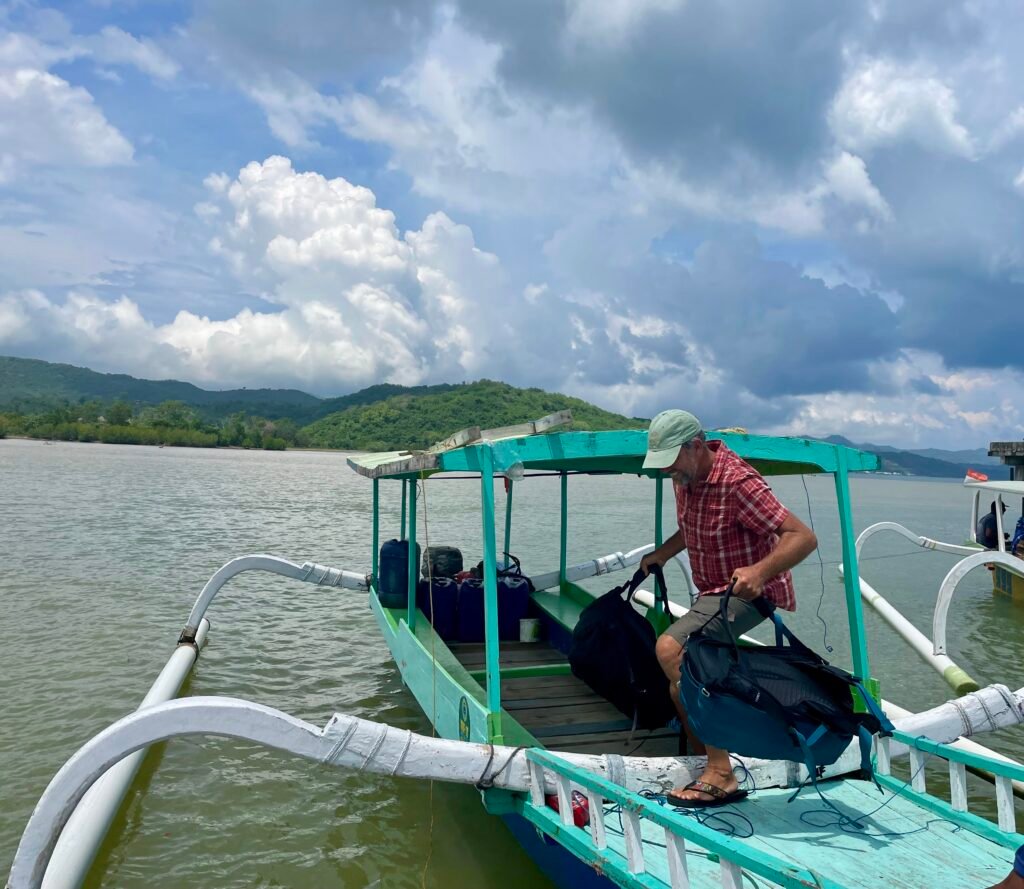
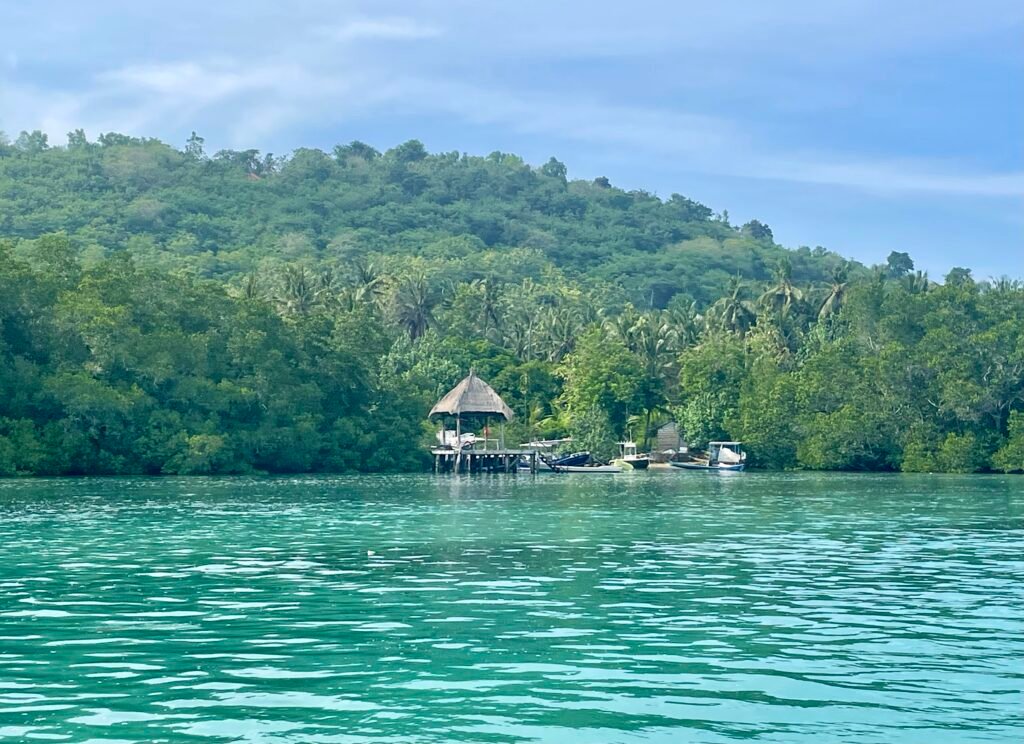
The Sundancer kindly dropped us at a small port for our 15-minute hop to Kokomo Resort on Gili Gede, where the next ferry would leave. The local boat was charmingly makeshift, whichever fishing vessel happened to be free, but at £3.50 each, who’s complaining?
The ferry from Gili Gede was another story. As the only service to Bali from the southwest, GiliGateway had hiked prices to ridiculous levels — £45 each — and the office guy’s customer service amounted to “take it or leave it.” With not enough cash to get back to the mainland and rethink our route, we took it and had to settle for seating on the boat roof since they were ‘fully booked’.
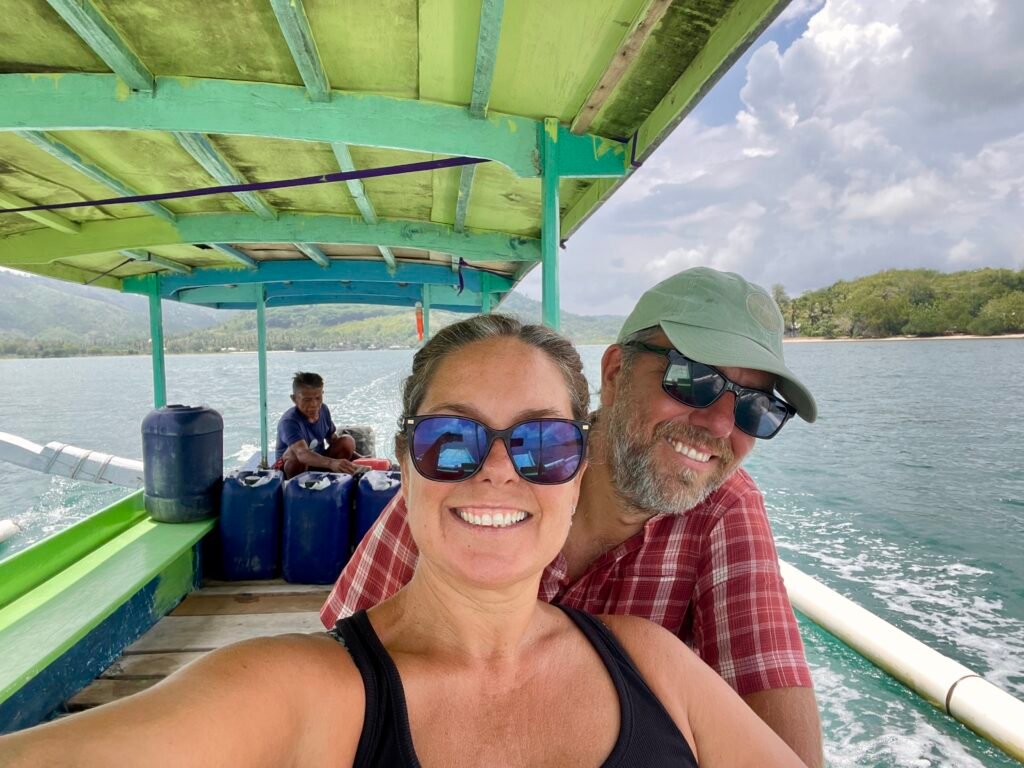
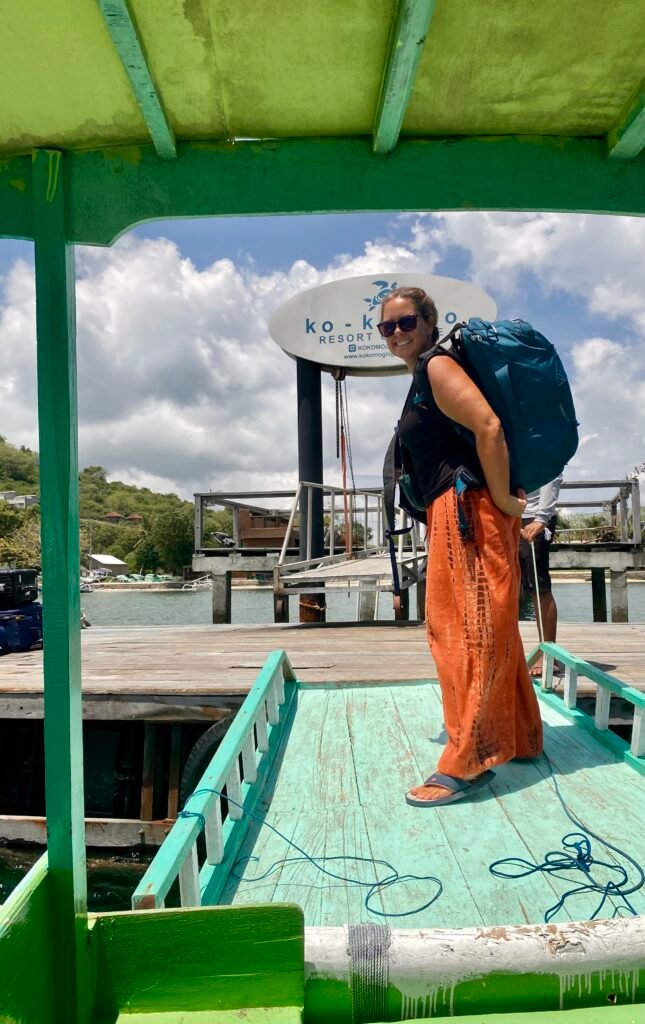
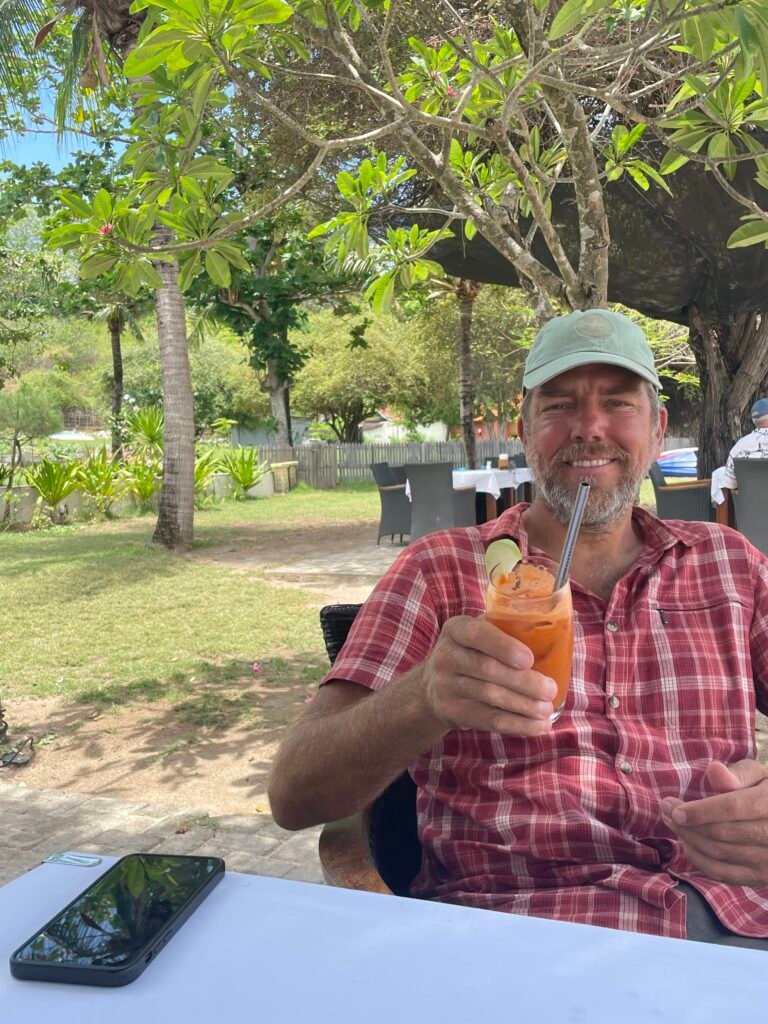
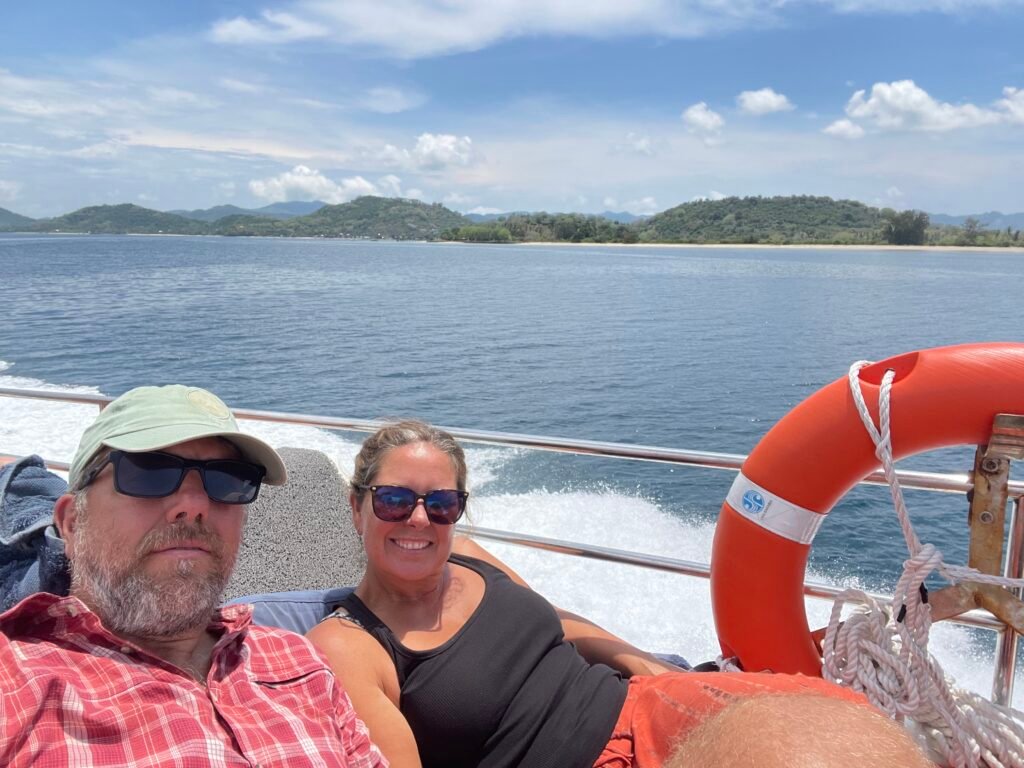
The ferry was 45 minutes late (I suspect a permanent state of affairs, conveniently boosting Kokomo Resort’s bar sales — perhaps not coincidentally). Once aboard, we roasted nicely sitting on the cabin roof in the midday sun but were rewarded with a brief dolphin cameo before docking at Nusa Penida.
No rest for the weary though, a surprise tourist tax awaited, cash only. Thankfully, we scraped together the 50,000 IDR needed to enter. Next, we needed an ATM and a ride to Toya Pakeh port. The area was deserted apart from a few half-asleep drivers and one particularly insistent woman. With no other choice, we accepted her “special price” £15 for a ten-minute drive, at least with an ATM stop en route.
After quiet Lombok, Nusa Penida felt like chaos incarnate — scooters, horns, people everywhere. It was our “welcome back to Bali” moment.
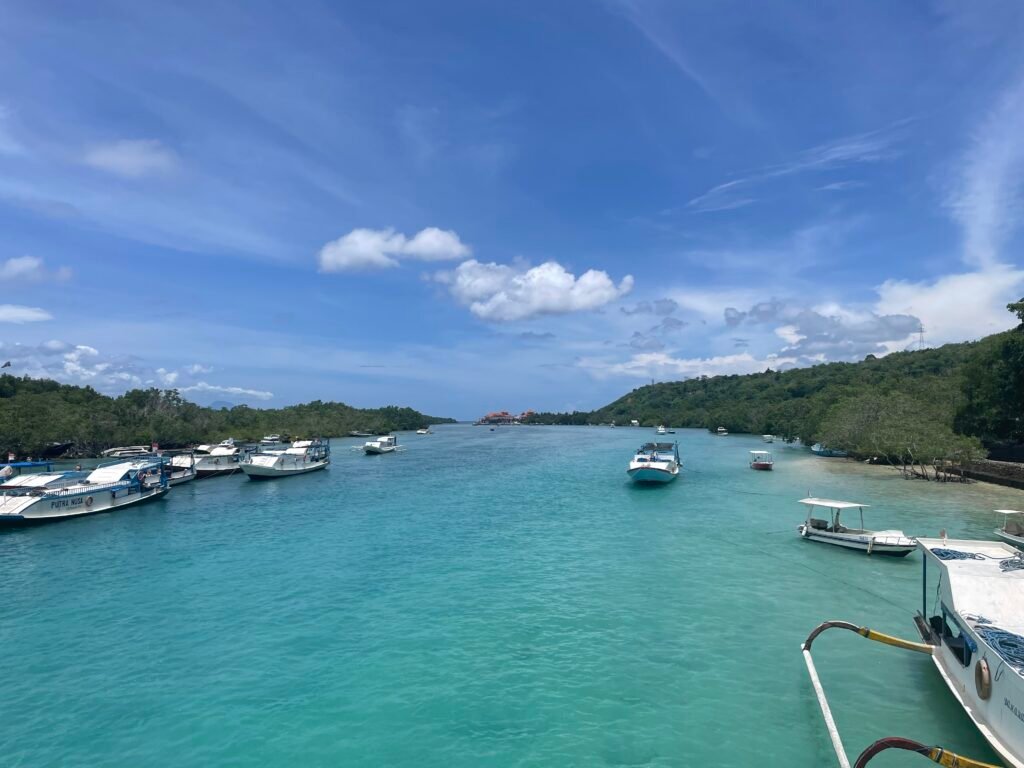
The final boat to Lembongan, thankfully, was a bargain at 150,000 IDR for two (£7.50). Ten minutes later we crossed the narrow strait and landed beside the famous Yellow Bridge — a bright, slightly wobbly structure linking Lembongan to tiny Nusa Ceningan.
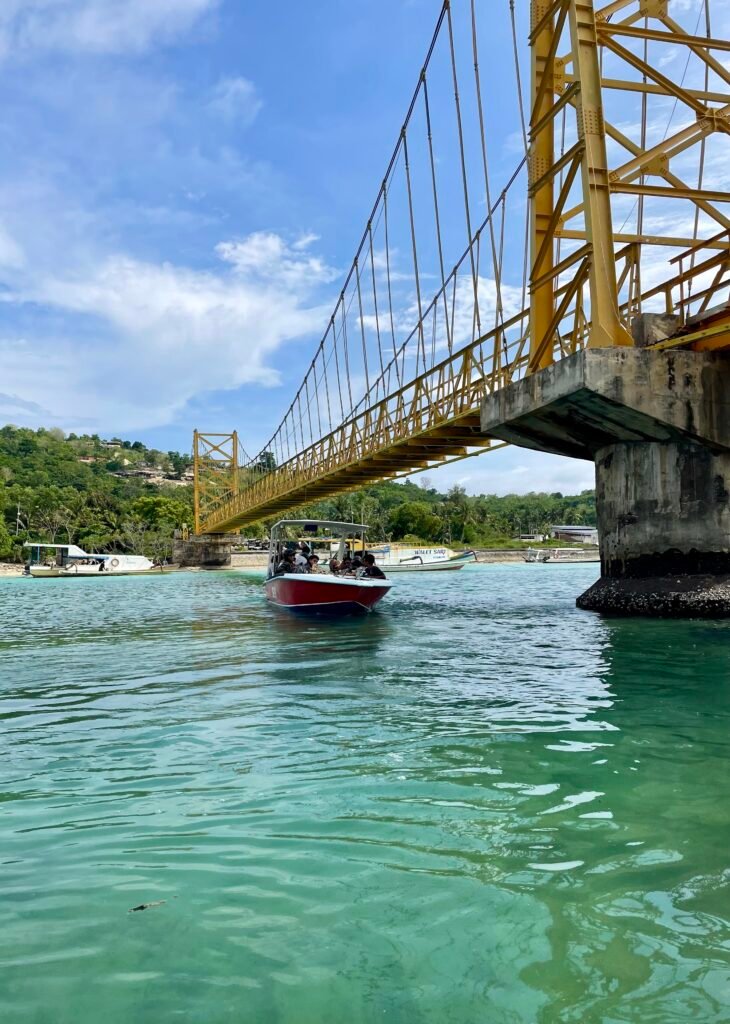
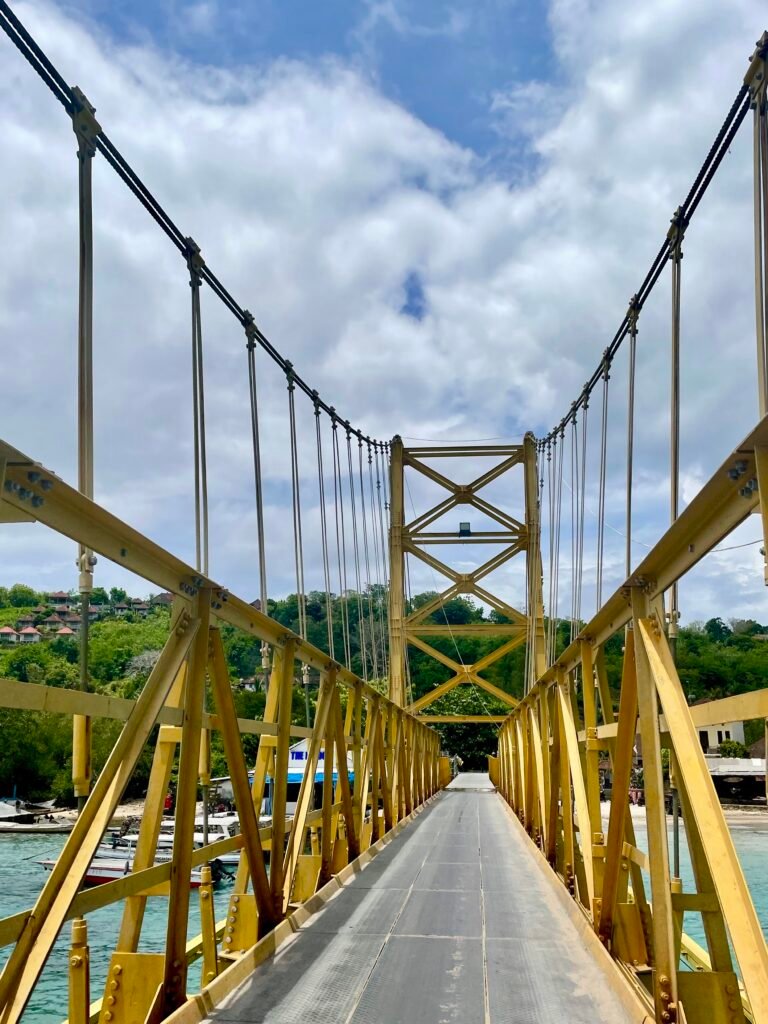
The bridge amused me — it looks like something salvaged from a British seaside town, welded back together, then painted yellow to hide the rust. But perhaps I’m being unkind, it is now a beloved landmark which replaced an original wooden structure after a tragic collapse which killed 8 people in 2016.
Nusa Ceningan
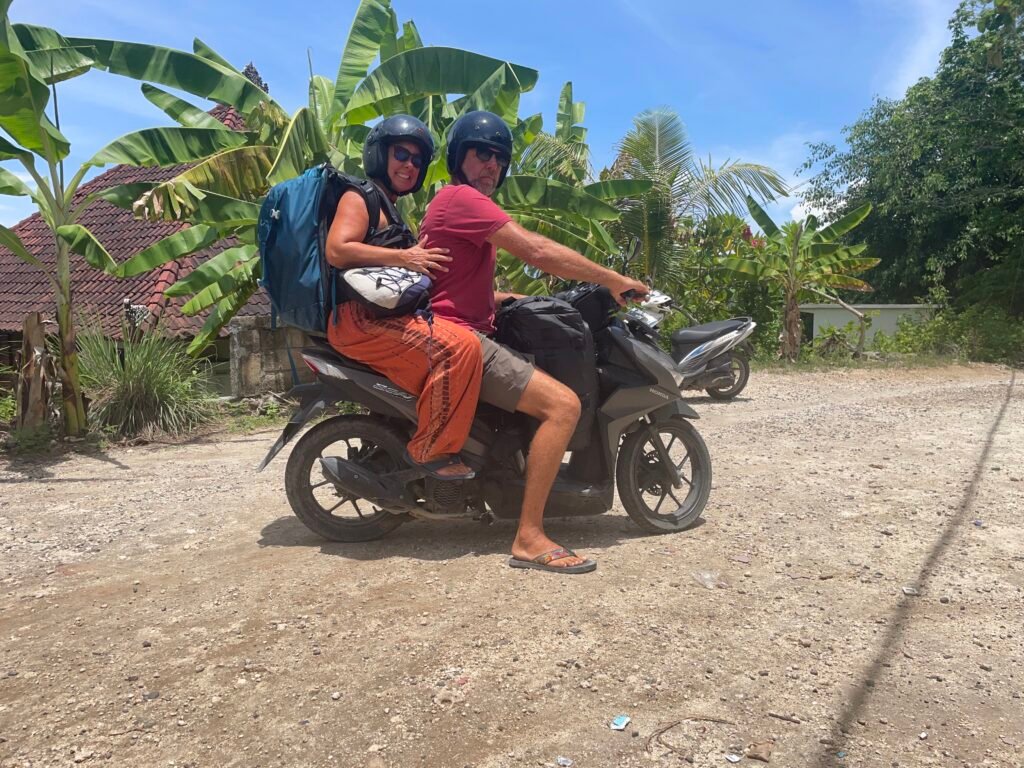
Ceningan turned out larger than expected. Google promised our hotel was a “25 min walk,” but with two backpacks and two day sacks, that wasn’t happening. Enter Ardi – conveniently stationed at the bridge, offering his personal scooter and two helmets for £5 a day. Deal done. With bags balanced and optimism loaded, we set off to find our home for the next few nights: Nusa Veranda Sunset Villas.
Sea Views and Wild Encounters
The roads on all the Nusa islands are atrocious. We’d accepted the bumpy tracks on the tiny Gilis, but with motorised vehicles and ten times the traffic here, we’d expected better. Still, as self-proclaimed scooter pros, we weaved through potholes and overtaking lunatics with ease , even managing to squeeze through a wedding traffic jam en route to the hotel.
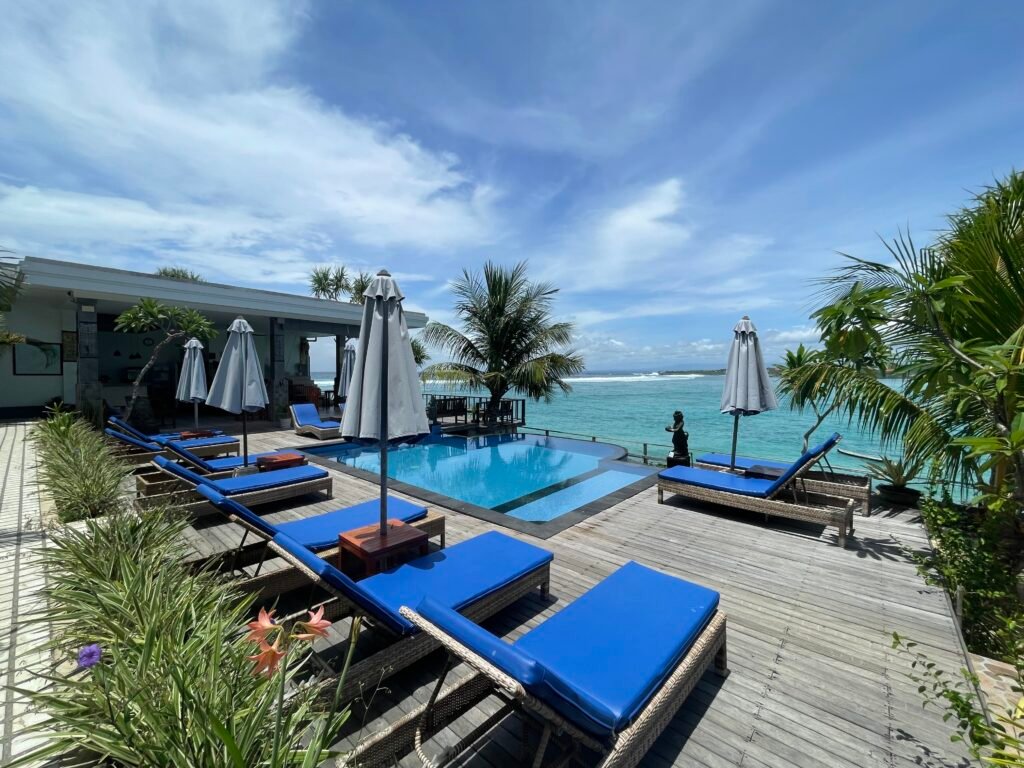
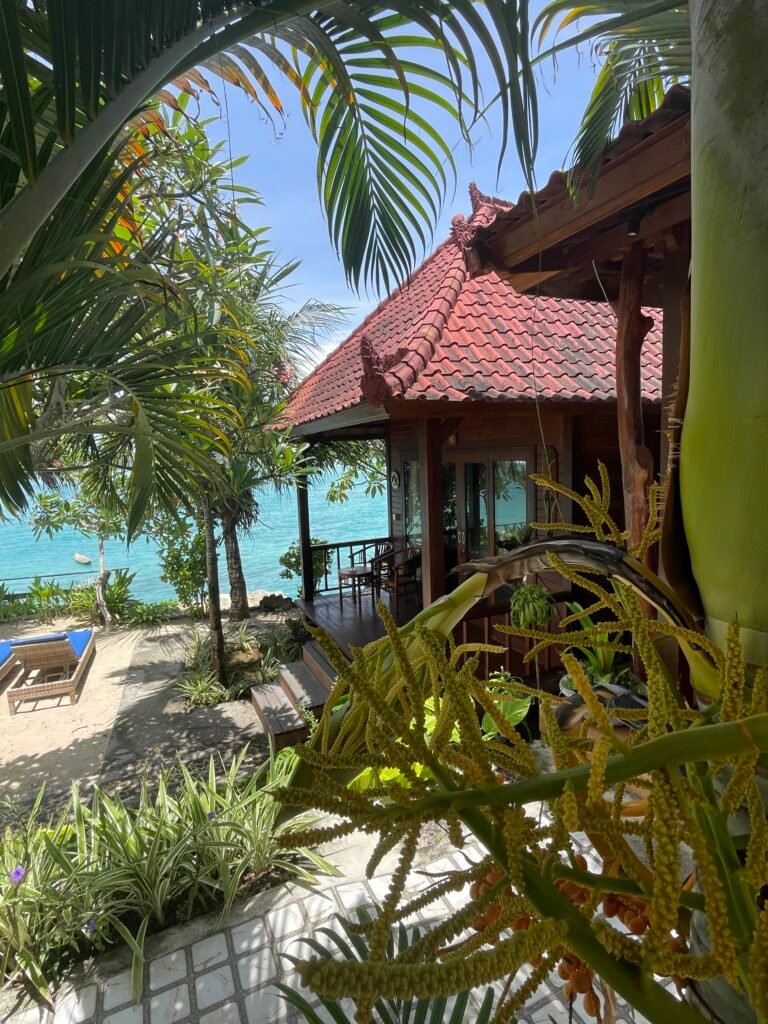
The Nusa Veranda sits perched on a clifftop at the end of a gravel track on the island’s west coast. A small place, maybe a dozen villas — some with ocean views, others circling a second pool tucked inland. We’d splurged on the sea view, and it was worth every rupiah. With welcome drink in hand, we were soon floating in the “very salty” infinity pool, gazing at the endless blue.
Our villa was clean, comfortable, and blessed with an “OK” shower and mercifully quiet air con. After a long travel day and a decent dinner, we slept soundly and woke refreshed for a day of exploring.
By mid-morning, our poor scooter had dragged us up brutal hills and over crumbling roads to see the best of Nusa Ceningan and Nusa Lembongan, via the infamous Yellow Bridge. Crossing it was easy enough until oncoming traffic appeared, at which point it became a game of chicken.
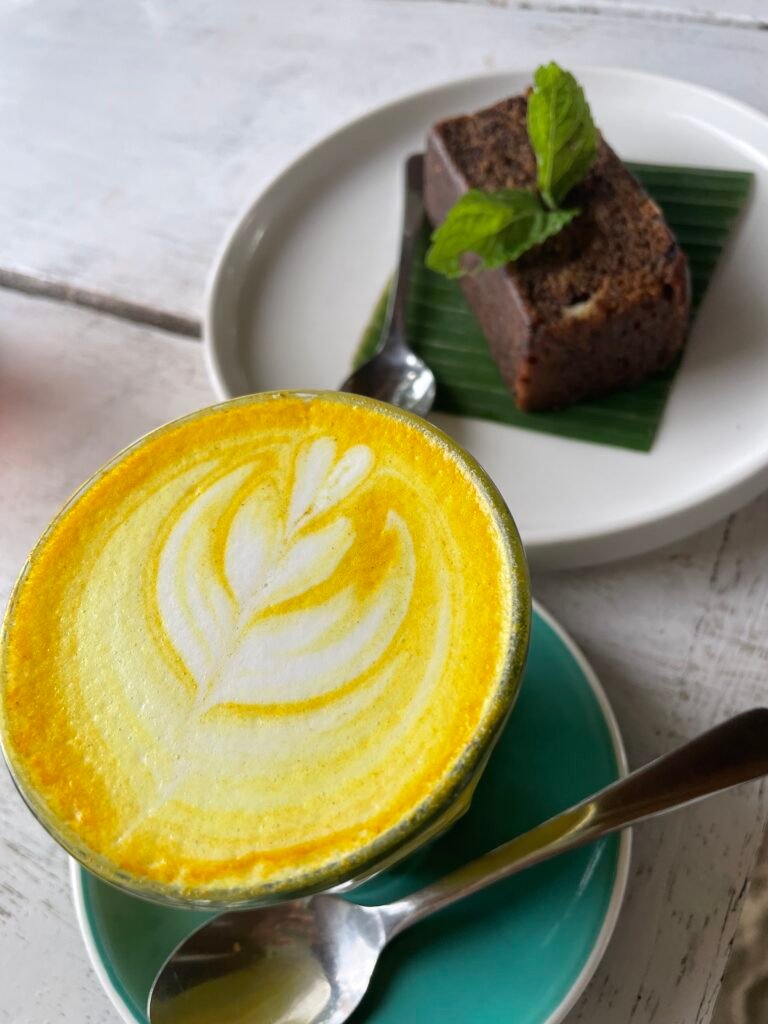
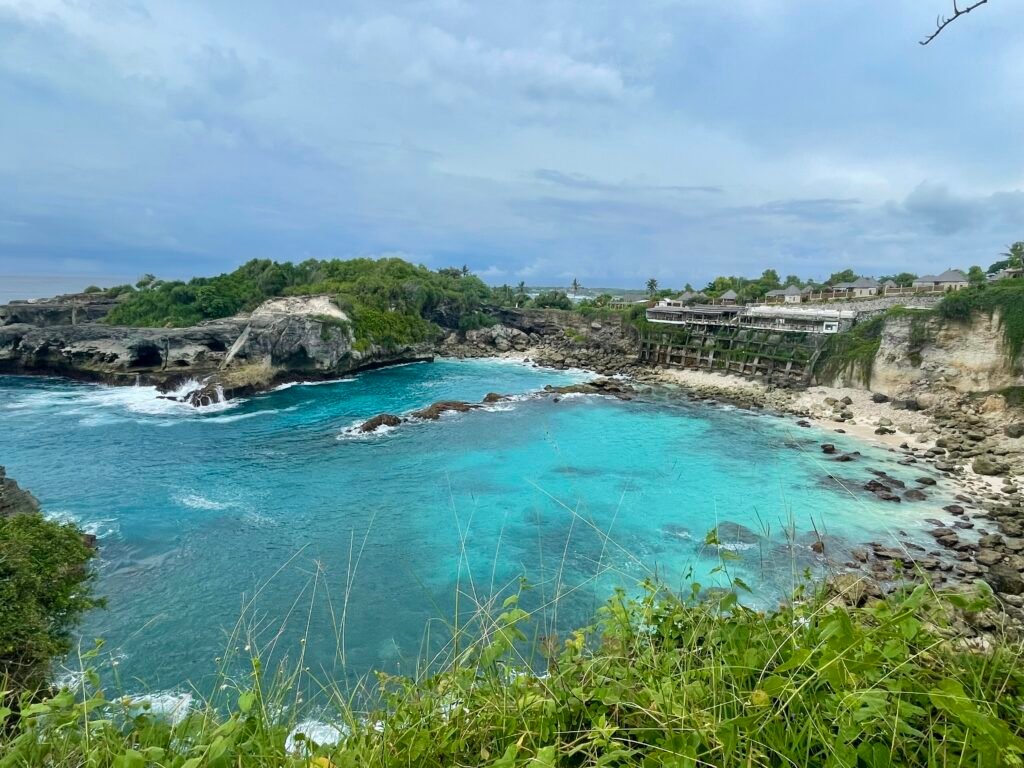
We ticked off most of the “must-sees” and a few “probably shouldn’t-sees”, including the impressive, abandoned hotel at Secret Beach. After a few hours lounging at Le Nusa Beach Bar (complete with free pool) and cake sampling at Ombak Café on Jungutbatu Beach, we just made it back to our villa before the heavens opened. Watching lightning dance over Bali with a G&T in hand, we debated the wisdom of our Manta snorkel booking for the next morning.
We’d swum with Mantas in Coral Bay, WA earlier in the year and been impressed by their ethical approach — conservation, respect, safety. Our research suggested Indonesia might be… less so. We knew participating risked supporting poor practices, but felt we couldn’t fairly judge without experiencing it first-hand. In hindsight, we might have chosen differently.
After an early breakfast we met our “guide” at the Yellow Bridge. The safety briefing was short and memorable:
“Safety is most important. Remember what colour the boat is. Don’t get on the wrong one. Let’s go.”
That was it. Safety box ticked.
By the time we reached Manta Bay, (Nusa Penida) the sea was choppy enough that any other operator would’ve cancelled. Of the nine people on board, one had never snorkelled and another could barely swim. No life jackets offered, no flotation aids — not ideal.
The bay was packed with boats, each spewing 10–15 tourists into the swell. Guides shouted “Manta! Manta! Manta!” whenever one appeared. Our guide, however, preferred a different tactic: “Follow me!” — before leaping into the sea still 150 metres away from the chaos.
Once clear of the crowd, we spotted two magnificent Mantas gliding just metres beneath us. It was a surreal, privileged moment — and utterly heartbreaking. The water was littered with plastic. We’d seen plenty of beach rubbish on this trip, but watching these graceful creatures swim through a soup of pollution really hit home.
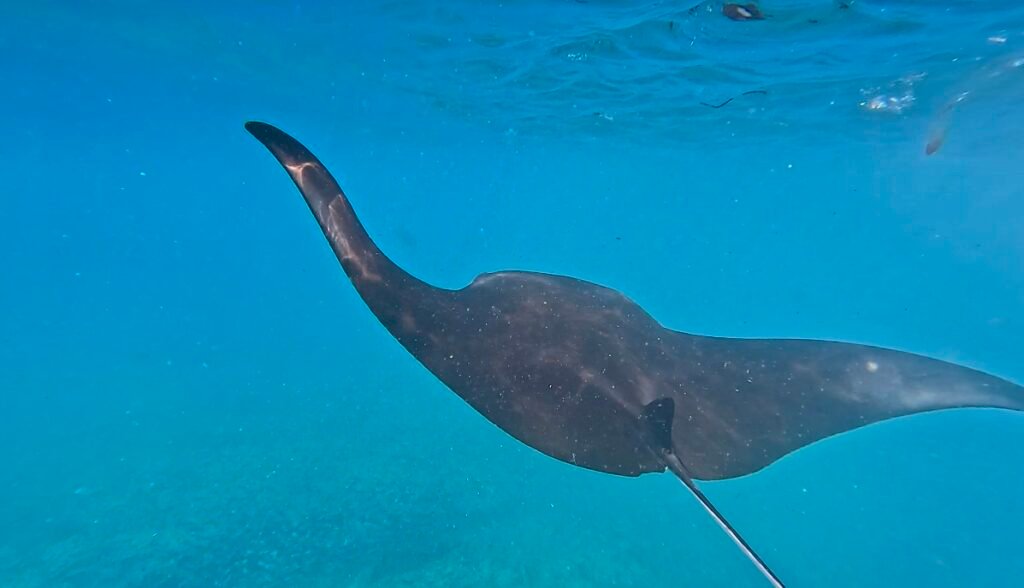
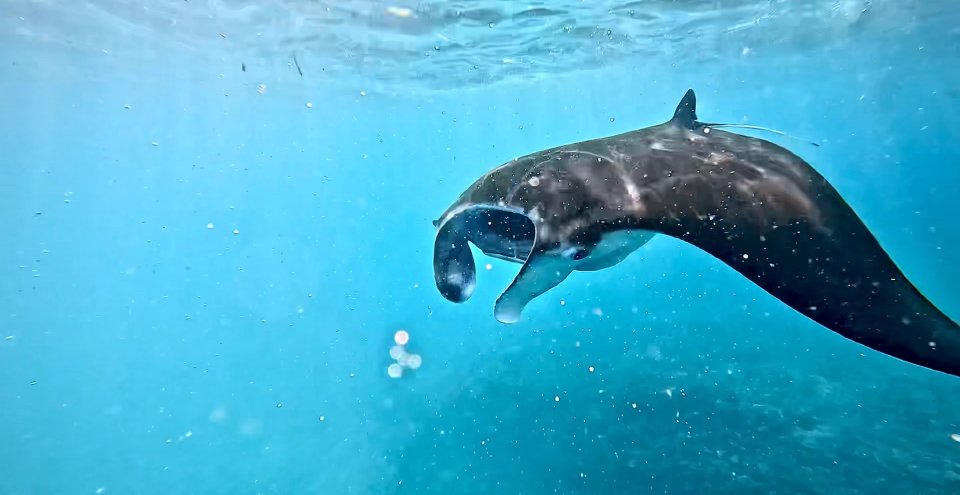
Thankfully no one was touching the rays, though some guides dived under them for photos, something strictly banned elsewhere. The Mantas seemed unfazed; perhaps they’re smart enough to ignore us.
The swim back was a slog through the swell. One poor guy vanished under the boat moments after jumping in. With our guide already chasing Mantas, it was left to a quick-thinking passenger to toss him a life ring. The rest of the trip he spent heaving over the side.
We stopped at two more snorkel sites, calmer with great coral and sea life — but still strewn with rubbish which we tried to keep hold of. If the seas had been calmer, we’d have collected more, but surviving the swell took priority.
Would we do it again? No. The safety was sketchy and the pollution gutting. Seeing Mantas so close was unforgettable, but we’ll stick to responsible, ethical tours from now on.
In a twist of fate, we later used a free drink voucher at ARNA Suites, whose infinity pool overlooks the famous Blue Lagoon. Peering over the edge into the azure waters 30 metres below, we spotted a huge Manta Ray cruising by — a breathtaking, bittersweet reminder of what’s at stake.
Our on time Nusa Chenangan ended with a final dinner at La Bianca, beach front dining, watching the sun set over the sea — reflecting on wild encounters, lessons learned, and the next big adventure ahead.
The final journey:
Reluctantly waking early on our final day to return the sooter to Ardi, the ‘random’ guy we’d rented off days before. As is so often the case in Indonesia, what seems like utter chaos makes sense and a WhatsApp message appeared asking what time we’d be dropping the bike back. Having had no contact from the guy all week we were shocked that the efficiency. After another good breakfast at the hotel, we loaded ourselves up and then ourselves onto the scooter for the short ride back to the Yellow Bridge.
Passing Ardi on the way, we were instructed to wait by the bridge where he would then give us a transfer to Mushroom Beach, the departure point for the ferry back to Bali. We waited 10 minutes, (in which time we were educated by a local guy not to stand under palm trees because the coconuts fall on your head) for Ardi who without any hesitation loaded Tara’s bag into the foot stand of the scooter and told me to hop on the back with my day pack and backpack already on my shoulders. Having taken a scooter ‘backie’ before in Padang Bai, I unfortunately knew what to expect. With two blokes and dozens of Kilos of luggage loaded up we were soon hurtling along the narrow Yellow Bridge and again playing chicken with oncoming traffic. Once at the Nusa Lembongan side of the bridge, I loaded everything onto a pickup and waited for Tara to walk over.
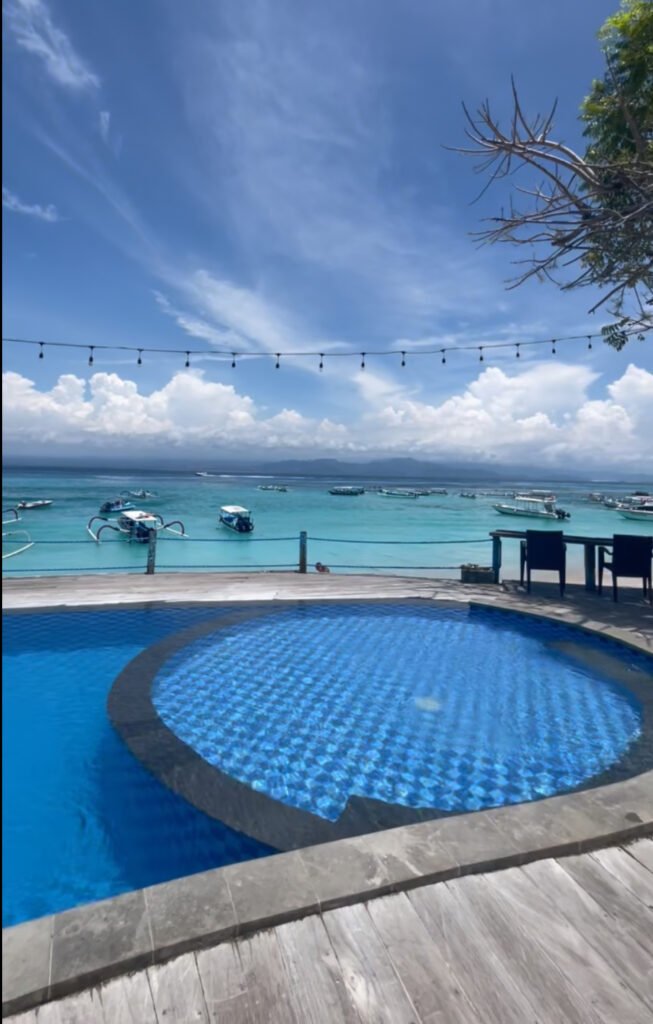
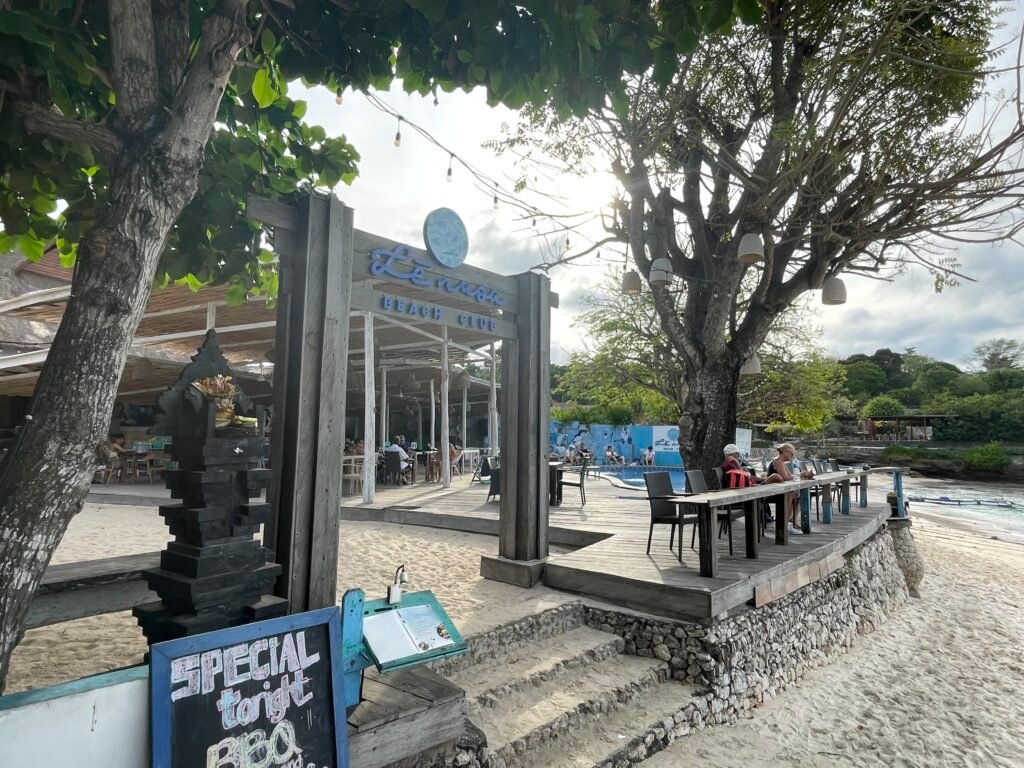
The transfer from the Yellow Bridge to Mushroom beach isn’t much more than 15-20 minutes and is a nice prelude to being reacquainted with the crazy Bali traffic. We’d already decided to spend a few hours at Le Nusa Beach Club and booked a ferry late in the day to maximise our time on the island (we’re never good at saying goodbye). The ferry booking kiosk is right on the beach with clear costs listed on the boards and relatively friendly staff. We booked a 3pm ferry giving us several hours to chill and enjoy the pool and bar. As a bonus the kiosk people took our bags into storage while we waited and tagged them ready to load onto our ferry.
For the rest of the morning and early afternoon we floated around in the pool, had a few drinks and laughed at the ferry companies battling the waves with their crazy beach loading procedure, knowing full well it’d be our turn soon. Watching the kids surfing amongst the ferry traffic, fisher men chilling out in the shade and the gentle slow-paced life on the island had a hold on us, dragging ourselves away to rush onwards to our flight took all the willpower we could muster.
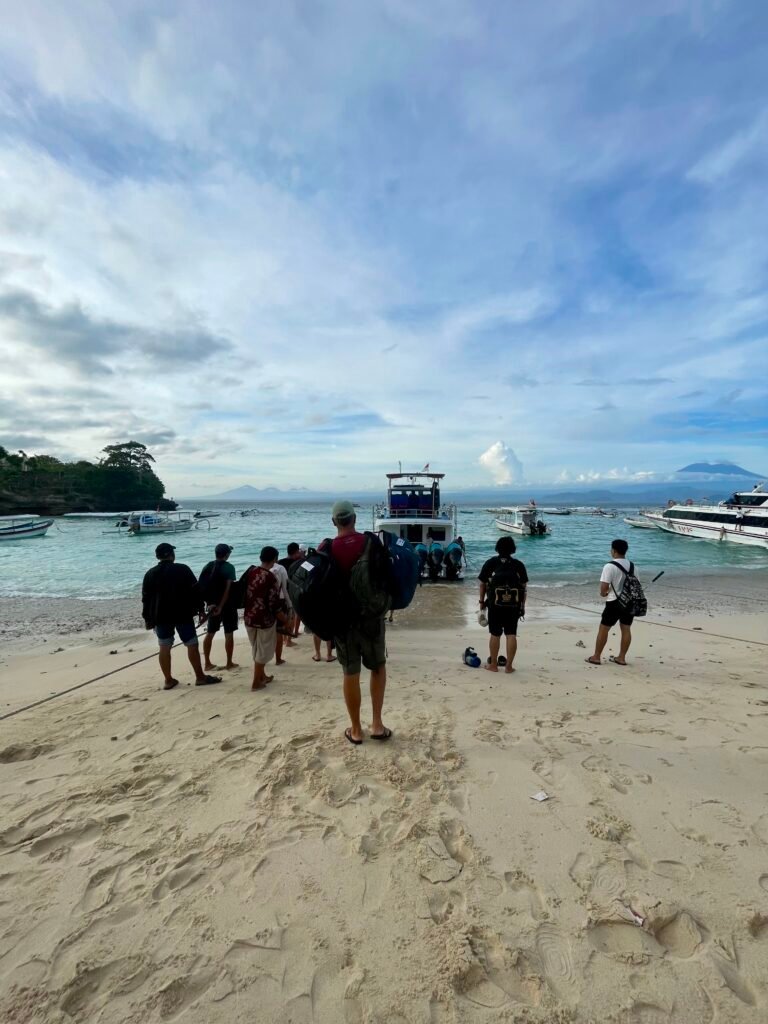
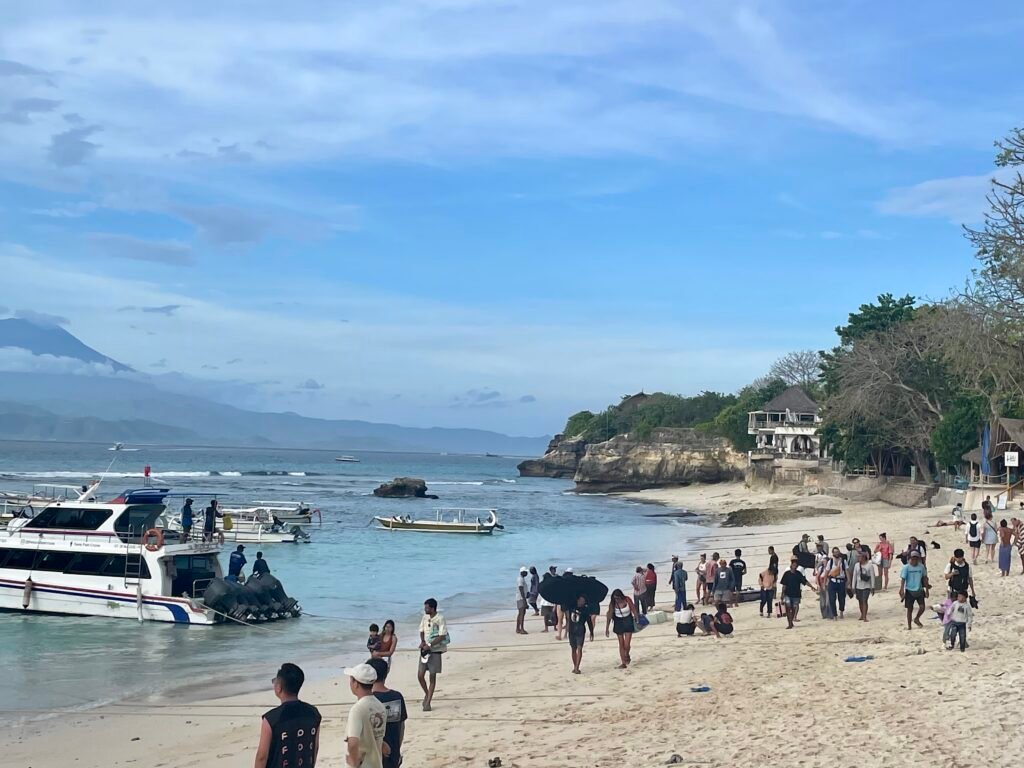
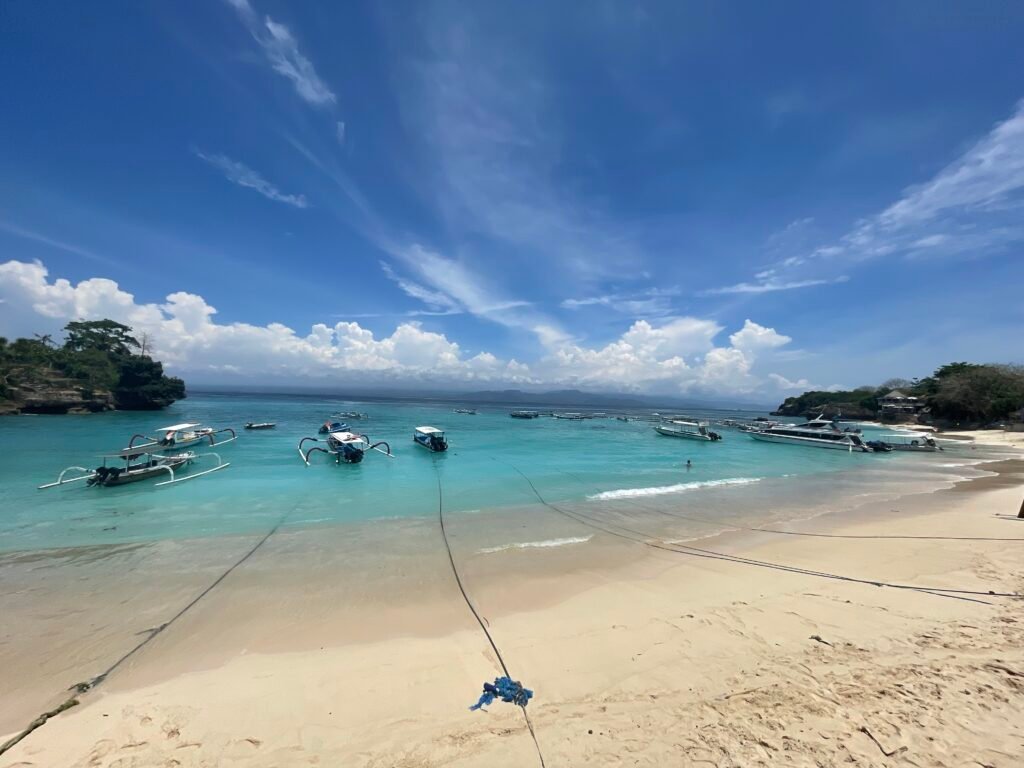
Finally, it was time to board our ferry. Worried (probably needlessly) that our bags wouldn’t make it, we grabbed them and clambered onto the boat. Boarding boats is a skill you develop after a few journeys in Indonesia. Waiting for the perfect moment when the boat and swell align to graciously hop up onto the deck. More often than not it’s actually a frantic scramble and then recovery of various shoes, hats and belongings strewn across the deck and surrounding ocean.
Again, the ferry was cramped airline style seating and the crossing a little choppy but thankfully it’s only a short 30-minute ride. (our journey took slightly longer due to a brief engine failure halfway across) The ferry is piloted like it’s a F1 car and again I found myself looking at the life jackets and planning my escape routes. Thankfully arriving without any major issues in Bali we realised that after three weeks away, we’d enjoyed the quieter and slower pace of Lombok and the islands. Bali’s energy was a shock to the system, so we avoided the majority of Taxi touts and headed for the sea front hoping to get a bite to eat and quick drink.
We’d stayed in south Sanur for a few days earlier in the trip, the ferry port was towards the north. Expecting much of the same, hotels, beach bars and small vendors, it couldn’t have been more different. We found a smart new strip of restaurants just south of the ferry terminal with a pleasant atmosphere and outside seating, all looking over the bay. We were spoiled for choice and ended up having Japanese street food, taking a chance at the menu with nothing in English or resembling food we could identify. Thankfully it was delicious and we were quickly refueled, hydrated and ready for the last push to the airport.
As amazing as the Grab app and system is, the taxis often can’t get to the exact pickup location you’ve set. After walking for 20 minutes in the direction of the prescribed pickup location, our booked driver sent through a photo of some random neon sign where he’d be meeting us. We couldn’t see the sign even though we were right at the ‘blue dot’ on our map. Just about to give up and ready to wave a cab down, we spotted someone waving from the other side of the roundabout. Heaving ourselves and our backpacks across the busy road, we were met by a jolly chap who politely explained that the street had been closed to taxis and he’d been waiting for us under the big billboard, which we could now see was facing in the opposite direction, no wonder we couldn’t see it! Anyway, with loads of time to spare we were finally on the last leg of the journey and heading for the airport.
The airport in Bali is great. It’s clearly signposted throughout and once you’re inside has loads of shopping and food options, and super clean toilets. Check in with AirAsia was a breeze, we were through security and chilling in the departure lounge within half an hour.
With time to reflect on our journey before the flight we thought of how the perceived chaos of backpacking and traveling had eased into being our normal. Just today we’d been on s
cooters, in the back of pickup trucks, boarded ferries, played hide and seek with taxis and now were about to board a plane, all without stopping to think or worrying about potential problems. In between all this we’d had time to chat and laugh with locals, float around infinity pools, eat Japanese food and walk along golden sand beaches, all within a single 24-hour day. This had become synonymous with our Bali and Lombok trip.
It’s easy to get frustrated at the inefficiency, easy to be bothered by the heat and humidity, the traffic is awful and the plastic litter is heart breaking, but there’s so much more. The people are friendly, welcoming and funny. The food is interesting, tasty and dirt cheap. The scenery is breathtaking with Instagram worthy shots around every corner, and the oceans are full of life and fringed with the most idyllic beaches imaginable.
Somehow the crazy and calm works well together, and after five weeks, we’d found our step and were in tune with island life, maybe it’s travelling life. Whatever it was we loved it and we were sure we’d be back, probably sooner rather than later.
I hope you’ve enjoyed reading about our adventures in Bali and Lombok, if you’re interested in how much our month trip cost, check out the budget blog.